Chanel’s Love for Craft and the Beauty of Slowness
Home, in its purest sense, resists definition; it is not confined by walls or structure, but shaped by feeling, memory, and intention. In this fluid space where boundaries dissolve, creativity is allowed to roam freely, unbound by time or form. For Coco Chanel, home was never just a physical place; it was an extension of her spirit, a silent echo of her artistic intuition. A new book invites us into this formless realm, where the codes of Chanel’s world, elegance, slowness, and meticulous craft breathe through every corner. Within this intimate sanctuary, the essence of making is not rushed but felt, shaped gently by instinct and emotion. Here, we uncover how Chanel’s creative energy lingers and evolves, timeless and uncontained. Find out more in Chanel’s Love for Craft and the Beauty of Slowness
Image on left- p.148 Photo M. Bérard. Patrimoine de CHANEL, Paris. Courtesy of CHANEL. All rights reserved, from
La Pausa, Flammarion
For Gabrielle “Coco” Chanel, home was more than a place; it was an expression of identity, artistry, and elegance. The legendary designer, who transformed 20th-century fashion with her timeless vision, sought a personal haven where she could retreat from the world. She discovered a quiet hilltop on the French Riviera and envisioned a space that would mirror her creative soul.
This dream retreat became a living expression of her impeccable style, artistic excellence, and enduring commitment to beauty in simplicity. She called it La Pausa, meaning “the pause,” a name that spoke of rest, stillness, and space to breathe. She didn’t just hire architects; she carefully chose every detail herself, imagining rooms filled with soft light and calm colours. The villa became her escape from the outside world.

Credit- Photo Roger Schall ©Schall Collection, from La Pausa, Flammarion
La Pausa stretched across 10,000 square feet, thoughtfully laid out with seven bedrooms, three living rooms, a dining room, and two kitchens, each space echoing Chanel’s love for modernity, light and simplicity. The furniture, much of it crafted from 16th-century English oak, was gifted by the Duke of Westminster and added a grounded warmth to the villa’s pale, sun-washed interiors.
Rather than filling rooms with opulence, she chose pieces that felt lived-in: worn wooden tables, wrought-iron bed frames, and stone fireplaces that blended comfort with quiet elegance. Every corner felt intentional, as if each item held its soft memory, part of a carefully curated palette through which she expressed her creativity across the home.
To hold this book is to hold a fragment of her world. Éditions Flammarion offers exactly that: a beautifully crafted volume that invites readers into the heart of Chanel’s sanctuary, bringing La Pausa vividly to life in print. Each word is imbued with the spirit of Mademoiselle’s retreat.

Credit- p.126 Photo M. Bérard.Patrimoine de CHANEL, Paris. Courtesy of CHANEL. All rights reserved, from
La Pausa, Flammarion
That is precisely what Éditions Flammarion now offers: an invitation to experience Chanel’s sanctuary through a beautifully crafted volume that brings La Pausa to life in print.
With a legacy rooted in elegance and intellect, Éditions Flammarion has shaped French publishing since 1875. Renowned for its commitment to culture and craftsmanship, the house has long produced thoughtful works spanning literature, philosophy, art, and design.
Like a sun-warmed postcard from another time, La Pausa: The Ideal Mediterranean Villa of Gabrielle Chanel unfolds as more than a book; it’s an experience of space, light, and memory. Published by Flammarion, the richly bound volume invites readers into the private world of Chanel.

Credit- p.130 © Photo Roger Schall ©Schall Collection, from La Pausa, Flammarion
Through over 500 archival photographs, many never seen before, and beautifully reproduced letters to friends like Picasso and Dalí, the book reads like a diary in still images. Each page carries the quiet breath of the villa itself: arched corridors, clusters of five windows letting in the Mediterranean sun, and the feeling of time slowing down.
In the world of fleeting trends and digital noise, some houses choose to whisper instead of shout, to imbue their creativity with a quiet excellence. Chanel, with its quiet defiance and commitment to artistry, is not merely making fashion; it is making memory. Through ateliers humming with centuries-old gestures, through pages of a newly launched book, through monumental curtains and cross-cultural conversations, Chanel stands not just at the edge of innovation, but at the intersection of time.

In the heart of Paris, a revered symbol of art, culture, and history has been reborn. After years of careful restoration, the Grand Palais, the majestic glass-domed exhibition hall built for the 1900 World’s Fair, reopened its doors to the world in June 2025. This architectural masterpiece, celebrated for its soaring Beaux-Arts design and vast, luminous interior, has long been a stage for the city’s most prestigious events, from art exhibitions to fashion shows.
Since 2018, Chanel has held the honour of being the Grand Palais’s exclusive patron, a relationship that reflects a shared dedication to heritage, craftsmanship, and innovation. To mark this historic reopening, Chanel unveiled a gesture that is both grand in scale and deeply intimate, a tribute to the enduring spirit of Paris and the timeless artistry housed within the Grand Palais’s iconic walls.

At the heart of Chanel’s commitment to preserving artisanal heritage lies Le19M, a creative hub in Paris that brings together the house’s dedicated Métiers d’art, exceptional craft ateliers that have long shaped the soul of haute couture.
Among them is Maison Lesage, famed for intricate embroidery and Chanel’s iconic tweeds; Maison Lemarié, known for delicate feather work, silk flowers, and pleating (including the integrated pleater, Maison Lognon). Maison Massaro, the master shoemaker behind the iconic two-tone Chanel pumps. Maison Michel, a celebrated milliner creating couture hats.
Maison Goossens, a goldsmith and costume jewellery artisan since Coco Chanel’s time. Maison Desrues, expert in buttons and statement costume jewellery; Atelier Montex, blending hand embroidery with contemporary technique. Maison Causse, glove makers since 1892, and Paloma, leatherwork specialists.
Together, these 8 Maisons, housed under one roof at Le19M, uphold and evolve the rare, time-honoured skills that define Chanel’s legacy of luxury craftsmanship.

Above the central Venetian window of the Grand Palais, an ornamental curtain rises: eight metres high, 15 metres wide, crafted by the Maisons of le19M. Feather marquetry by Lemarié. Gold cherry blossoms by Goossens. Geometric embroidery by Montex. Pleated silk by Paloma. Every Maison sings in harmony, yet retains its voice.
Led by Studio MTX, the architectural embroidery studio, the curtain embodies verticality and reverence. It shimmers not as décor but as dialogue, between light and shadow, modernity and memory. Suspended manually, its motion honours the stage, the human hand, the idea that performance begins not with spectacle, but with craft.

As the book about La Pausa casts light on the House’s past, another project gestures toward the future. This year, Chanel and The King’s Foundation announced a new Métiers d’art Millinery Fellowship in partnership with le19M. Based between the Highgrove estate and Trinity Buoy Wharf in London, the 35-week residential programme nurtures postgraduate artisans in the precise, poetic world of hat-making.
Guided by Maison Michel, the Parisian hat-maker and le19M resident, students learn blocking, featherwork, flower crafting, and couture-level finishes. Inspired by the serenity of Highgrove Gardens, the training unfolds with mindfulness, respect, and a sense of time.
Here, once again, Chanel resists speed, modernity yet respects timelessness. The Fellowship is not just education; it’s transmission. It ensures that hands remain central, that tradition is not fossilised but reimagined, and that the elegance of millinery is not lost to mass manufacture.

While this curtain rises in the heart of Paris, Chanel’s narrative stretches farther still eastward, where another cultural chapter awaits. La Galerie du 19M Tokyo is a cultural exhibition presented by Chanel, showcasing the craftsmanship of its Métiers d’art.
Now, with La Galerie du 19M Tokyo, Chanel extends this mission across continents, celebrating the intersection of French savoir-faire and Japanese craftsmanship. More than an exhibition, the space is a living, breathing homage to artistry, featuring immersive installations, hands-on workshops, and collaborative works between Japanese and French artisans.
It is a poetic journey through embroidery, pleating, featherwork, jewellery-making, and beyond, a reflection of Chanel’s quiet commitment to preserving tradition while embracing the future. In this way, Tokyo can become a mirror of Paris, both cities linked by beauty, precision, and the enduring human hand behind every creation.
From 30 September to 20 October 2025, le19M sets its feet in Tokyo, occupying the 52nd floor of Roppongi Hills Mori Tower. In a city where silence holds weight and beauty is found in restraint, La Galerie du 19M Tokyo feels like destiny. The exhibition is free and open to the public, inviting audiences of all ages to explore and engage with the world of Métiers d’art.

The exhibition, Beyond Our Horizons, unfolds in three movements. Le Festival, a luminous installation by Atelier Tsuyoshi Tane Architects, introduces raw materials, tools, and gestures as art in motion. Lesage: 100 Years of Fashion and Decoration offers a tender retrospective of one of Chanel’s most storied embroidery houses.
And the central exhibition, with works from over 30 Japanese and French artists and ateliers, becomes a bridge of breath between cultures. At its core, La Galerie du 19M Tokyo is not a show. It’s an exchange. It celebrates the handmade, the humble, the human. And in every stitch, feather, pleat, and fold, it speaks in a universal tongue: respect for creation.
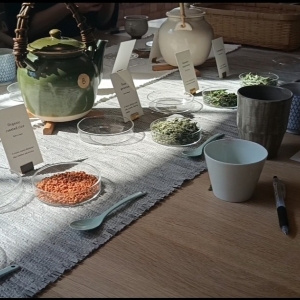
With hands-on workshops, talks, and even a tea bar curated by Editorial Committee member Shinichiro Ogata, the experience is multisensory, a living homage to savoir-faire and shared heritage.


As Chanel regenerates age-old craftsmanship through le19M, it also pioneers new frontiers in beauty and skincare innovation with the launch of N°1 De Chanel, a holistic, eco-responsible beauty line that champions both well-being and scientific performance. At the heart of this collection lies the red camellia, a resilient flower beloved by Gabrielle Chanel for its purity and symbolic strength.
After 19 years of research, Chanel scientists unlocked the red camellia’s powerful antioxidant properties, which form the core of the N°1 De Chanel Serum-in-Mist, an ultra-light, bi-phase formula designed to revive and protect skin on the go.
This youth-boosting mist is not just a skincare step; it’s a modern beauty ritual, crafted for contemporary life. Compact, refreshing, and remarkably effective, the Serum-in-Mist delivers instant hydration, shields skin from oxidative stress, and enhances radiance throughout the day.
Housed in a vibrant red vessel inspired by the flower itself, it embodies both luxury and functionality, a symbol of Chanel’s ability to balance elegance with innovation. Whether spritzed on at a festival, on a long flight, or before a night out in Paris or Tokyo, N°1 De Chanel proves that the future of beauty is both sustainable and sensorial, led by nature and driven by science.
Chanel’s journey from the serene hills of La Pausa to the vibrant streets of Tokyo is a testament to how honouring tradition while embracing innovation can craft a legacy that transcends time. At the heart of the House lies a deep respect for craftsmanship, where every stitch, texture, and object tells a story.
This is not just about fashion; it is about a way of life that values intention, slowness, and emotional connection. La Pausa was more than a home; it was a physical expression of Coco Chanel’s philosophy: that beauty is found in simplicity, in quiet elegance, and details made by human hands. Today, the House of Chanel continues to carry forward this ethos, fusing the artisanal with the modern, the past with the present.
Through its collections, spaces, and stories, Chanel reminds us to pause, reflect, and appreciate the art of creation. In doing so, it shapes not just the future of beauty but the future of how we live, with grace, purpose, and timeless artistry.
If you enjoyed reading Chanel’s Love for Craft and the Beauty of Slowness, then why not read Fendi, Luxury Inside The Handbag and Out
.Cent Magazine London. Luxury Minded
Follow us: