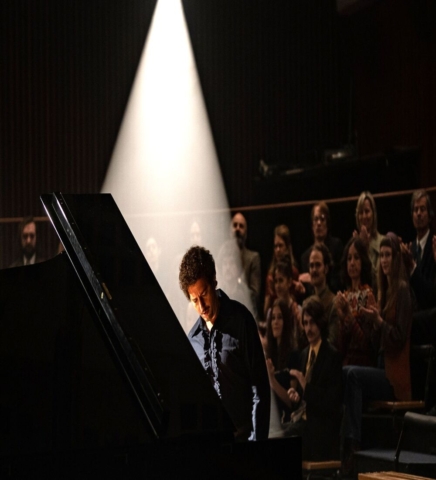
The Magic Music of Timbre: Explore Bright, Light, Dark, Rich.
“Brightness” has a couple of meanings when it comes to music. It can refer to single notes, but also to chords, and musical sound; it is commonly called “tone” or “treble and bass”. But in another take, and, in simple terms, the dark, light, rough, smooth and richness of music is known as ‘timbre’ and is what makes a particular musical instrument or human voice have a different sound from another, even when they play or sing the same note. It is what gives music its emotion, so find out more in The Magic Music of Timbre: Explore Bright, Light, Dark, Rich.
In musical references, the word Timbre is the distinct tonal quality or “colour” of a sound. It allows us to differentiate between different instruments or voices, even when they are playing or singing the same note at the same pitch and volume. It’s what makes a trumpet sound different from a violin, or your voice sound different from a flute.
Both instruments can sound equally tuned in relation to each other as they play the same note, and while playing at the same amplitude level, yet each instrument will still have its own distinctive sound with its own unique tonal colour. Musicians distinguish instruments based on their varied timbres, even when instruments play notes at the same pitch and volume.
Timbre is not exclusive to any particular genre; rather, it’s a universal characteristic of sound that is utilised in various ways across all musical styles. Think in terms of say, opera, and the difference between a Tenor, a male voice type, a Soprano, very high octaves, a Mezzo sings in the middle ranges, whereas an Alto is the lowest of the female voices and then a Bass at the bottom of the scale.
Timbre plays a crucial role in shaping the emotional atmosphere of music. A bright, clear timbre can evoke feelings of joy, while a dark, muted timbre can create a sense of sadness or mystery. Composers and musicians utilise timbre to evoke specific emotional responses in the listener, regardless of the genre.
Timbre is a perceptual quality, meaning it’s how we emotionally interpret the physical vibrations of sound waves, not just the sound waves themselves. Timbre is a crucial element of say, vocal harmonies. Here, it’s about the unique tonal quality of a voice, which distinguishes it from other voices even when singing the same note. When blending vocal harmonies, understanding and matching timbres is essential for creating a pleasing and cohesive sound.
Even within the same instrument, musicians can vary their timbre through techniques like bowing or plucking a string on a violin or using different types of mallets on a drum. This allows for subtle variations and expressive nuances within a piece of music, regardless of the overall style.
Swapping instruments, strings, or the way it is played will also have an effect. Without changing a single note, the simple change from, say a wind instrument to an electric guitar will have a huge impact.
One single song can also highlight this ‘colour’ when the singer is able to utilise their voice; their ability to harmonise affords a unique vocal texture, a sonic signature.
Marvin Gaye’s “I Want You” is characterised by a smooth, mellow, and sensual vocal timbre, reflecting the song’s romantic theme and Gaye’s intimate performance style. He uses his mid-range tenor voice, often described as smooth and soulful, to convey vulnerability and desire. The song also features Gaye’s signature falsetto, adding a layer of emotional depth and sweetness to the overall sound.
Written by songwriters Leon Ware and Arthur “T-Boy” Ross and released as a single by singer Marvin Gaye in 1976. The song introduced a change in musical styles for Gaye, who, before then, had been recording songs with a funk edge.
Lykke Li is a Swedish singer, songwriter, and model known for her unique blend of indie pop, electronic, and experimental music.
Her voice, often described as velvety and rich, is a prime example of a distinctive and recognisable vocal timbre.
Dimash Qudaibergen is a Kazakh singer, songwriter, and multi-instrumentalist. He is university-trained in classical as well as contemporary music, and is known for his exceptionally wide vocal range
Dimash performed a vocal version of “Ave Maria” at the final gala concert of the International Competition of Young Performers “New Wave-2021” in Sochi, Russia. His emotional interpretation can be described as both sharp and cold.
Thelonious Sphere Monk was an American jazz pianist and composer widely considered one of the giants of American music. He had a unique improvisational style and made numerous contributions to the standard jazz repertoire. His compositions and improvisations are full of dissonant harmonies and angular melodic twists, and are consistently unorthodox. His approach to the piano combined a highly percussive attack with abrupt, dramatic use of silences and hesitations.
‘Round Midnight” is a 1944 jazz standard, and it is thought that Monk originally composed the song sometime in 1940 or 1941. “‘Round Midnight” is the most-recorded jazz standard composed by a jazz musician. In musical lists, it appears in over 1,000 albums.
Igor Fyodorovich Stravinsky was a Russian composer and conductor. He is widely considered one of the most important and influential composers of the 20th century and a pivotal figure in modernist music. Known for his use of dissonance, which was achieved through various techniques, including polytonality, where multiple harmonies are stacked on top of each other.
This ballet score, The Firebird, is known for its vibrant and evocative orchestration, employing various instrumental colours to paint a vivid musical picture. It showcases Stravinsky’s ability to create a range of moods and atmospheres through his skilful use of the orchestra.
While other Stravinsky pieces also exhibit strong timbral qualities, “The Rite of Spring” and “The Firebird” are particularly notable for their groundbreaking and influential use of orchestral colour.
Billie Eilish, the American singer-songwriter and musician, began working on songs with her brother Finneas when she was 13 years old.
She has a natural soprano vocal range, and her vocals have been referred to as ethereal. Yet others describe her work with terms like teen-goth-angst, all of which allows her to captivate a diverse audience. Her signature breathy vocal style creates a sense of vulnerability and closeness with the listener, drawing them into her music.
The quality of a sound or musical tone is determined by its overtones and is different for each voice or instrument, as well as each performer and each musical genre.
The higher the frequency, i.e more treble, the sound will be brighter, but tone down the treble, cut out the higher frequencies, and the sense of the music is darkened.
Ultimately, timbre plays a crucial role in musical expression, allowing composers to create specific moods and atmospheres by choosing instruments with complementary timbres. As well as allowing performers to use their voices in the same way, to change the emotion and mood. It also helps us identify different musical styles, artists, and even historical periods.
If you enjoyed reading The Magic Music of Timbre: Exoplore Bright, Light, Dark, Rich why not read
Follow us: