What Is Minimalistic Music? A Formless Yet Powerful Sound
Some things in the world resist structure, convention, and form. Clouds that stretch and fold unpredictably, waves that fold over themselves restlessly on a shore, rain that trickles down streets and windowpanes, tracing unforeseeable paths. Formless, unbound, impossible to pin down completely; yet when we encounter them, they feel infinite, alive, and quietly insistent. Their quietness carries power, and and beneath the surface lies a hidden pattern, even if we are not instantly aware of it. Minimalist music grew from the same impulse: to step outside conventional structures and let sound exist on its own terms. What is minimalist music? If this sounds enticing, find out more in What Is Minimalistic Music? A Formless Yet Powerful Sound.
Minimalist music grew from the same impulse: to step outside conventional structures and let sound exist on its own terms. At its core, minimalism in music is about repetition, gradual change, and attention to detail. Instead of moving quickly from one idea to the next, it lingers, stretches time, and invites us to notice what happens when a single phrase is repeated until it becomes something more. The result? Music that feels less like a story to follow, and more like a world to live in and inhabit.
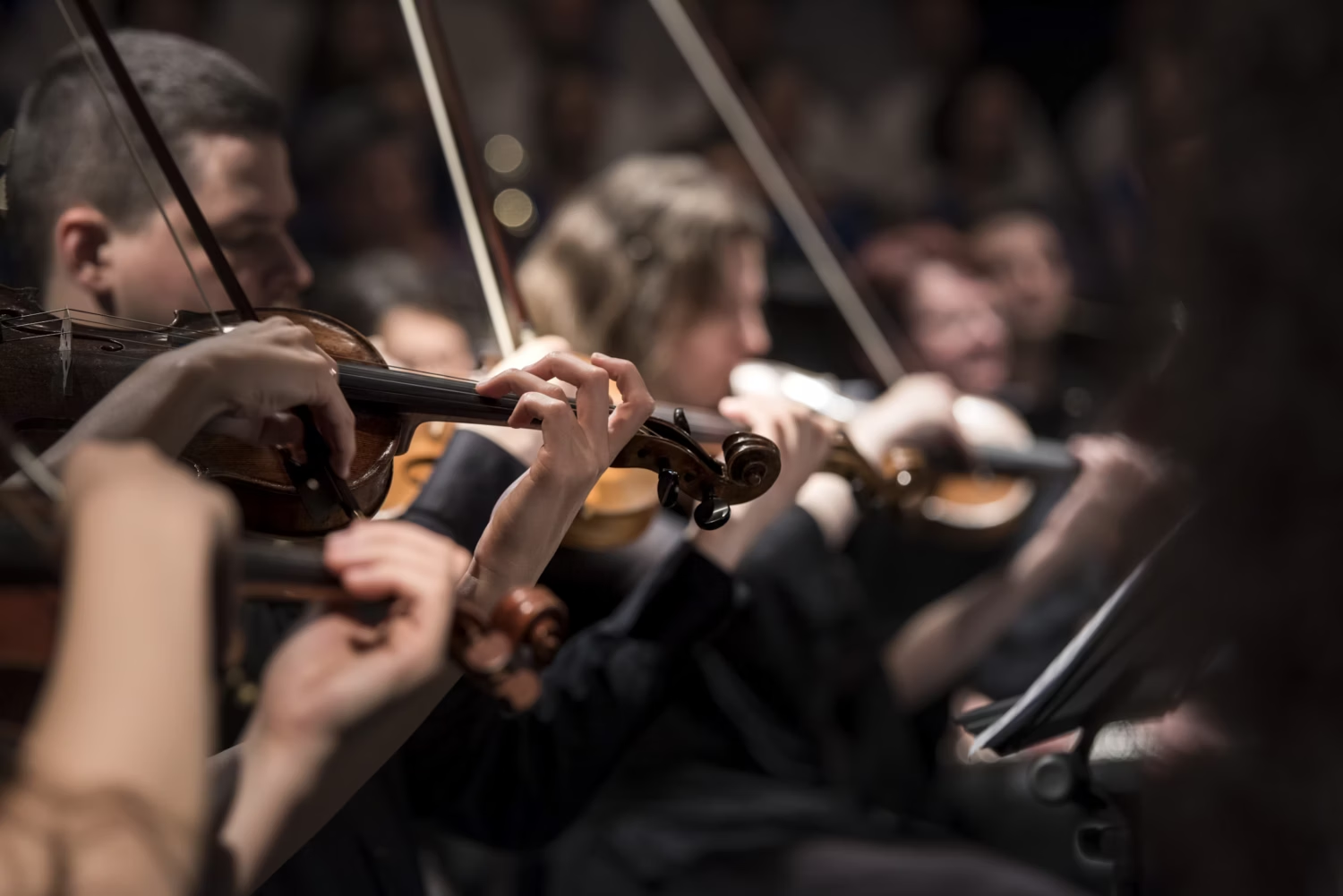
String quartet in Oradea, June 13, 2016.
Credit: Larisa Birta, Unsplash.
Minimalism in Music: The Basics
Minimalism as a movement began in the 1960s, in reaction to the dense and complex forms of classical modernism that came before it. Composers like Steve Reich, Philip Glass, La Monte Young, and Terry Riley (amongst others) sought to pare music down to its most essential core elements: pulse, repetition, and subtle variation.
And so, we saw the birth of Minimalism in Music; an art that is deeply appreciated today.
Steve Reich: Precision in Minimalist Music
Steve Reich expanded the vocabulary of minimalist classical music with Music for 18 Musicians (1976), a musical piece where interlocking rhythms phase in and out of alignment with one another. ‘Phasing’ means that two musicians (or recordings) play the same phrase but gradually drift out of sync, creating shifting, rippling musical patterns. Although this sounds minimal, the effect it has is immersive: tiny changes reveal themselves slowly, and the listener’s attention is pulled into the smallest of details. Reich’s music demonstrates how repetition is not monotony, but a way of transforming perception.

Steve Reich, Composer. Photographed between 1982-1984.
Credit: Bernard Gotfryd.
Other transformative works of his, such as Clapping Music and Different Trains, continue to show how Reich used rhythm and texture to create evolving, powerful soundscapes.
Philip Glass: Sound Spirals
Philip Glass took a different approach to minimalist music. In Einstein on the Beach (1976), a five-hour opera, he abandoned traditional storytelling and conventional form. Instead, the piece unfolds through spiraling arpeggios (a musical term, referring to the notes of a chord played one after the other, rather than all at once) and repeated syllables. The result? Hypnotic. Time stretches, and the listener is immersed in a world of sound, rather than just a narrative.
Glass’s style later also influenced film music, with scores for movies like Koyaanisqatsi and The Hours, truly proving how minimalism in music can evoke both grandeur and intimacy.

Training for the opera, Einstein on the Beach, Dortmund, 11 April 2017. Credit: Wikimedia Commons.
Beyond the Concert Halls
Minimalism music did not remain confined to modern classical music. Its principles (repetition, space, gradual transformation) proved adaptable to many genres. The influence of minimalism in music can be heard in ambient music, such as Brian Eno’s Music for Airports, in film scores, such as Hans Zimmer, who often uses minimalism music techniques to build tension, and even in electric genres, which emerged decades later.
Minimalism in Dance and Electronic Music
Minimalism as a technique found new life on the dance floor. In the 1990s, Robert Hood, a pioneer of Detroit techno, released Minimal Nation. Techno is a style of electronic dance music, built on drum machines and synthesizers, usually focused on rhythm and repetition. Hood stripped techno down to its core essentials: a kick drum, a hi-hat, and a faint synth pulse. The result? Stark yet alive. A rhythm that seemed to breathe through not just the floor, but the body and the mind.

Modern Techno Set, 11 March 2020.
Credit: Zac Bromell, Unsplash.
Around the same time, Chicago producer Larry Heard was crafting what is now called ‘deep house’ music, using extended loops and subtle variations to craft tracks like Can You Feel It. A ‘loop’ is a repeated section of sound or music, often layered and shifted over time. Heard’s grooves unfolded gradually, pulling dancers into a hypnotic trance.
Other artists carried minimalism into the club; Richie Hawtin (Plastikman) stripped techno down to ghostly pulses and skeletal beats, Ricardo Villalobos stretched house tracks into half-hour long explorations, where tiny shifts became monumental. In ambient techno music, artists like Basic Channel blurred rhythm and atmosphere, proving how repetition could be both meditative and physical.
The same principles that defined Reich and Glass (patience, repetition, and attention to detail), live on in these dance-floor forms.
Terry Riley: Finding Musical Form in Formlessness

Riley perfoming in 2018, 9 August.
Credit: Diario de Madrid, Wikimedia Commons.
If Reich and Glass formalized minimalism’s reach, Terry Riley planted its earliest seeds. Riley, an American composer, first drew listeners into the world of minimalist music in 1964 with In C. The piece consists of 53 short musical phrases, played by any number of performers at their own pace. This means a performance could last anywhere from 20 minutes to three hours; no two are ever the same. The orchestra of individuals create a living breathing field of sound that feel both infinite and unpredictable.
Other famous compositions by Riley, such as A Rainbow in Curved Air (1969), layer keyboard and saxophone into hypnotic spirals. Church of Anthrax (a collaboration with John Cale) and Shri Camel continue exploring repetition and space, stretching time until a single phrase begins to feel eternal.
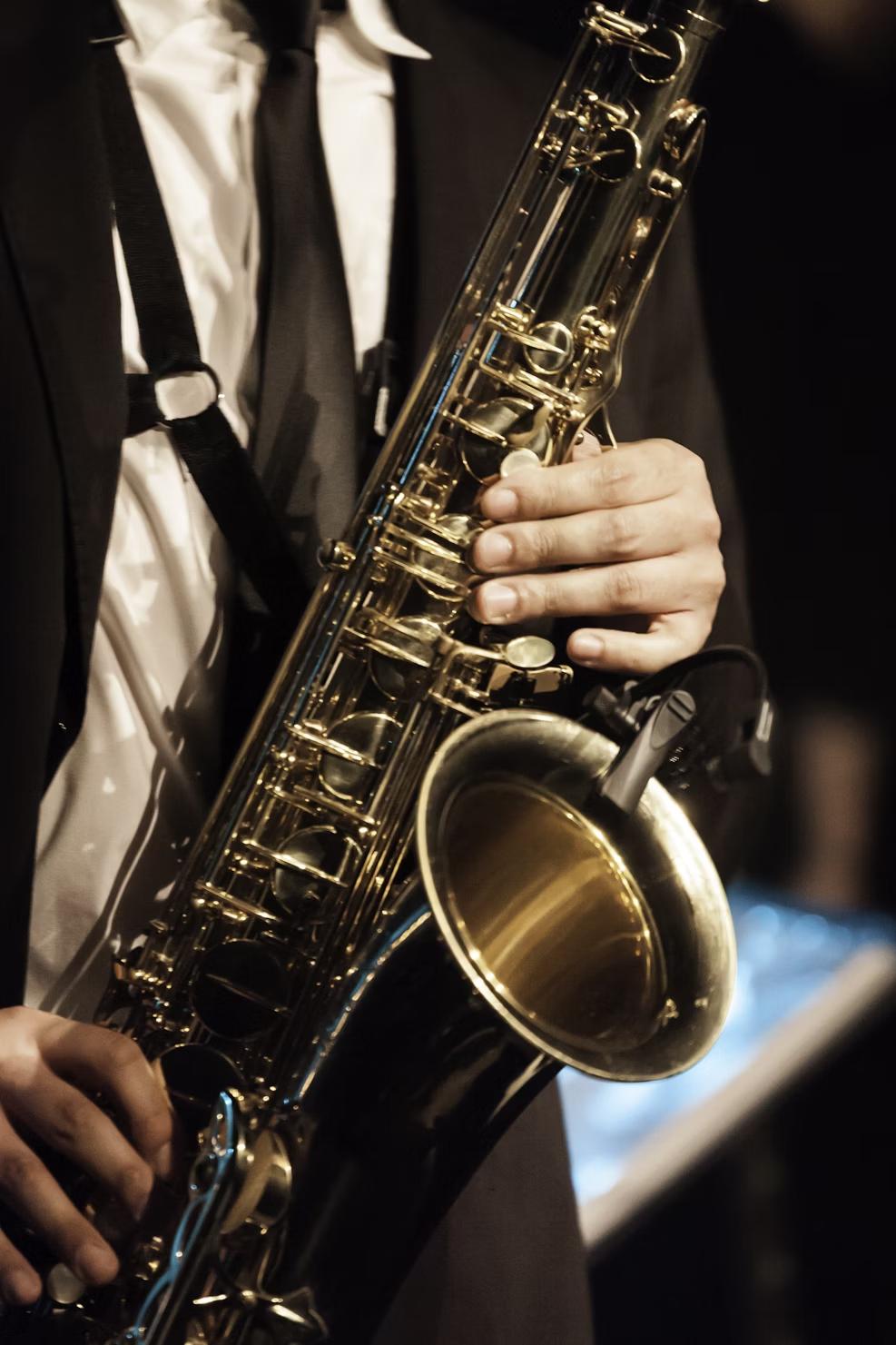
Saxophone player, close up. 9 February 2020.
Credit: Reno Laithienne, Unsplash.
This summer, Riley’s legacy is being celebrated with The Columbia Recordings, a four-disc box set from Sony Classical. It collects his pivotal works from 1968-1980, alongside essays and rare photographs. Hearing these recordings today highlights Riley’s radical craft: music that refuses to be contained, finding its own musical form in its formlessness. The box set is not just a retrospective, but an invitation to step into the infinite.
How is Minimalist Music “Formless”?
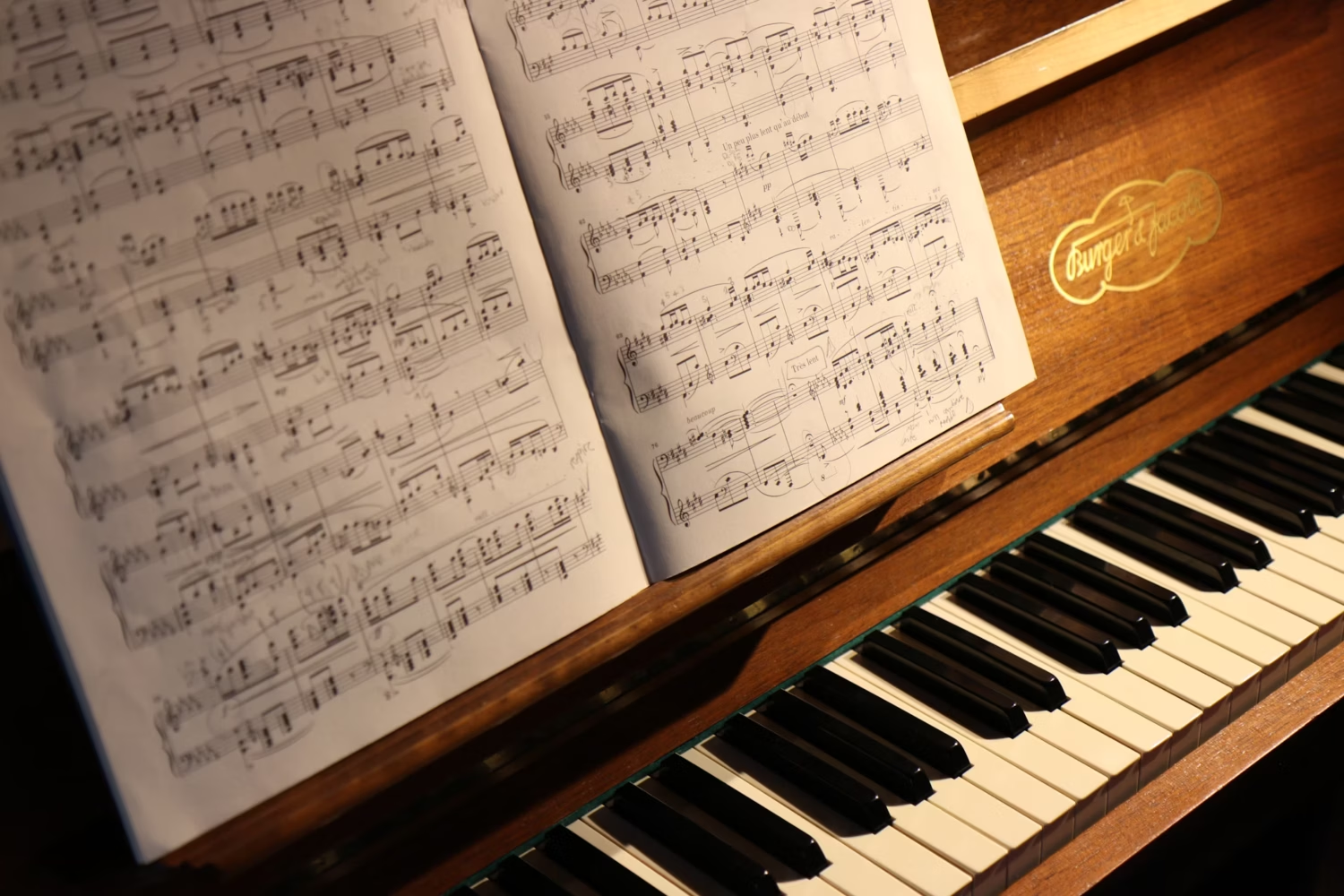
Minimalist music is often called “formless.” Taken literally, the term is misleading; these pieces do have structure, but it is emergent rather than prescriptive. Instead of a composer dictating every detail, the structure arises through repetition, variation, and interaction. A single repeated note, a looping phrase, a shifting pattern: these are the building blocks of a musical world without traditional boundaries.
24 December 2017.
Credit: Lorenzo Spoleti, Unsplash.
Riley, Reich, Glass, Hood, Heard, as well as their successors, demonstrate that music can exist not only as a story to follow, but as a space to inhabit, a pulse to feel, a meditation to live inside. The power of minimalism lies in its quiet insistence: it asks us to slow down, to notice, to linger.
In repetition, we find transformation. In formlessness, presence.
The sound of the smallest note, repeated long enough, becomes infinite.
If you enjoyed reading What Is Minimalistic Music? A Formless Yet Powerful Sound, then why not read Formless and Fearless: Poetry’s New Edition.
.Cent Magazine London; Luxury Minded
Follow us: