London Fashion Week Spring Summer 2026, New Trends For You
London Fashion Week is here, gracing yet again with creative talent and unique fashion that is sure to shake things up. Take a look at some highlights to inspire your wardrobe moving into Spring Summer 2026.
Jeff Garner’s new collection, entitled the curious ‘Billy Shakespeare’, is coming to the runway in parallel to his fashion documentary ‘Let Them Be Naked’, which explores issues surrounding toxins found in garments. The show and film amalgamate environmental advocacy and fashion:
‘We are not provided with wisdom; we must discover it through a journey no one else can take for us.’
Jeff Garner
Taking inspiration from the Wild West and Victorian England, the collection mixes natural dyes in Earthy tones, rugged silhouettes, and poetic rebellion. The fabrication of each piece comes from non-toxic, biodegradable materials and natural dyes from Garner’s Tennessee farm. Drawing on British heritage techniques, it employs colours like Raven Black from the Cotswolds.
The Billy Shakespeare collection projects Garner’s Native American and Tennessee roots, as well as English and Scottish ancestry. The collection evokes the early pioneers, drawing on the raven’s role in both Native and Celtic traditions: a bringer of light and discernment, a symbol of balance, renewal, and transformation. The result is a careful blending of historical influence and modern innovation.


Nominal London has kicked off London Fashion Week, guns- blazing, sparking up Park Lane. All gathered at Mr Porter for a pre-fashion show rendezvous. Hosted by Alan Endfeild and accompanied by the likes of I AM A ROCKSTAR and Ivanrey Entertainment. Nominal dresses up the catwalk with its velvet smooth and embossed leather Autumn Winter 2025 collection.
A brand said to be rebellious, electric and polished, its newest collection continues to negate just this. In the collection, we can see affluent bold colours partnered with silhouettes and flares giving off a cool rockstar edge with a dash of chic. Taking it one step further, with its sculpted pieces and exuberant flowing garments. Nominal London is earning its stripes in the London fashion scene. An event said to be a night of good vibes, laughter and a celebration of self – liberation. Nominal London Autumn Winter 2025 collection fashion show was a night to be remembered.


This show marked Sprayground’s debut at London Fashion Week 2025, bringing the vibrant energy of New York City street style to the catwalk. Sprayground unveiled a boundary-pushing collection that fused luxury craftsmanship with streetwear attitude, showcasing bold accessories, luggage, and bespoke high-fashion pieces that challenge the norms of traditional fashion weeks.
The colour palette was varied, bright, and eye-catching, resulting in a graffiti effect: a nod to the brand’s name. With shades of neon green, pink, and sophisticated black, the designs showcased a maximalist approach that employed accessories and shapes, pushing the bounds of what is wearable. Its use of fabrics was fearless and experimental, from latex to leather and even crocheted yarn. The collection toyed with sharp-lined patterns and boxy, fashionably cartoon-like silhouettes, redefining the looks one might associate with travel.
Sprayground championed a bold, innovative spirit, transforming classics like suits and long coats into elaborate and vibrant pieces, leaving the spectators in awe.


Dave Benett
JW Anderson’s Redesigned Soho Store
JW Anderson, a brand known for its experimental designs that play with androgyny and unexpected silhouettes, is now switching direction completely. The new collection is focusing on handmade furniture, home wear, as well as fashion and accessories that aren’t just seasonal, but timeless.
To complement this shift, JW Anderson has now revealed the redesigned store in Soho. The space is minimalist yet cosy and personal, with off-white walls and woody, earthy accents. It reflects designer Jonathan Anderson’s own sense of inner peace as he compiled his passion for all things fashion and interior in the new shop.
The products being sold include pastel blue mugs, floral jugs, and rustic items, reminiscent of an idyllic, nature-filled life in a cottage. Meanwhile, the noble brown wooden chairs showcase the artisanal craft of the brand.


Paul Costelloe’s Spring Summer 2026 collection, entitled sweetly ‘Boulevard of Dreams’, draws inspiration from the soft, feminine fashion of 1967, and particularly from actress Sharon Tate.
‘I am taking you on a walk, my arm held closely with none other than the style icon of the decade, Sharon Tate.
I think Sharon Tate and the dolls of the valley might have liked some of the styles you’re seeing today – modern and realistic with bold styling.’
Paul Costelloe
The collection features playful swing dresses in soft corals, sculptural trapeze coats with exaggerated collars, demure cut-out gowns and sharp-lined tailored pieces.
Costelloe embraces a palette of bold sherbets-pinks, corals, oranges and sky blues contrasted with tailored minimalism. Fabrics range from summer-weight textured tweeds, crisp linens and luminous silks, capturing both structure and fluidity.
As a unique accent point, the accessories and sculptural pieces give the collection a three-dimensional edge, giving the garments a summery, glamorous feel. They echo the cool, coral colour palette interwoven in the fabrics of each look. This is a product of Costelloe’s collaboration with Ivy J Studio Jewellery, which brings an architectural counterpoint to the softness of the collection.


Olu Ogunshakin
Bora Aksu’s Spring Summer 2026 runway show draws on a personal interest of the designer himself: an archive of broken dolls collected over many years. Fragility transforming into strength is the overarching theme of the collection, with resilience being hidden in elegant imperfection.
‘Broken dolls remind me that beauty does not lie in perfection but in the traces of love, time, and survival.
Through this collection, I wanted to create a world where flaws and cracks are celebrated not as weakness, but as strength and beauty.’
Bora Aksu
Aksu turns to vintage-inspired fabrics to weave memory into design. The discovery of small lace manufacturers in Istanbul and their dead stocks from the 1980s provided a source of limited and unique laces and trims. The Lace-trimmed cottons, softened ginghams, faded taffetas, and layers of pastel tulles are combined with sheer organza and diaphanous silks.
To further channel the overlap between fragility and strength, the collection blends the light with the dark. Colours unfold with powder pinks, soft corals, and peaches. These tender hues are anchored by moments of depth: ghostly whites, shadowy blacks, and touches of midnight blue, adding contrast and grounding the dreamlike aesthetic.


Jason Lloyd-Evans
From Taipei to London: A Sensory Showcase of Taiwanese Creativity
Led by an all-Taiwanese team, this exceptional showcase of Taiwanese creative brilliance featured four designers – Apujan, Infdark, Jenn Lee, and Ray Chu. Curator Rain Wu presented garments as unique narratives, with garments embodying individual journeys of their designers.
The visual presentation defines the atmosphere of Taiwan, integrating the four brands’ clothing. It displays an abstract interpretation of Taiwanese sensibility—environmental friendliness, emotional depth, and innovation.
Each look invited the wearer into a fantasy world by merging traditional and futuristic garment-making techniques.


Infdark centred on cultural narratives, reinventing traditional Taiwanese motifs for the 21st century.


Blending the gothic with romanticism, Jenn Lee’s playful craftsmanship inspired experimentation, with multi-purpose pieces that empower women to explore their multifaceted identities.


Chu towed the line between structure and fluidity, showcasing the brand’s vision through fabric choice, from upcycled tea leaf waste and fabric from fish-scale waste.


Oscar Ouyang’s 2026 collection feels like being amongst a flock of birds. The collection sets itself at the centre of a ball:
‘Feathers, saved for freer times, were worn with defiance, as if to declare that our beauty won’t be despoiled. They were placed on the head, as if to mimic the king of the forest, and even upon the thigh.
The former moved as their wearers danced, parading in the air to the sound of the music; the latter stood still, tightly pressed against bare legs.’
Oscar Ouyang
Amidst Ouyang’s creative narrative are designs that boldly experiment with fabrication, complementing the rustic colour palette of forest green, carky sand and deep-sky blue.
The feathery headpieces add a touch of nature, thus suggestive of the way humans are intertwined with the environment. The collection is rooted in practicality, amalgamated with a sort of fictional Narnia world. The designer boldly experiments with merging pieces we wear day to day with unexpected, angular silhouettes.


Keburia is returning to London Fashion Week 2025, taking us on a time capsule with its Summer Spring collection, emulating the style and grace of the 80s women before us. Embodying confidence and edge with its sharp shoulder pads, contrary to its other pieces with ruching and flow, giving off a flirty and demure feel.
Keburia collection is nothing short of diverse, fusing the worlds of digital and history. Keburia uses silhouettes and shaping to tell just this story of how extravagant it can look once military uniforms, Victorian shaping and sci-fi fantasy coexist. The collection brings on a playful take on the 3 worlds, displaying bubble skirts, cropped blazers, miniskirts, flared trousers and bold prints. So, whether you’re a fashionista from the army down to a gamer. This collection caters to all. All intertwined with leather, denim, lace and gabardine to create something unique.


Mark Fast unveils a collection shaped by tide, time, and transformation. Inspired by long walks along wild beaches and the objects washed ashore, Fast captures the resilience of sea glass and the raw beauty of salt-bleached denim, turning them into sculptural, emotional fashion.
The palette features pale stone, frosted pink, muted yellow, cream, and nude colours, softened and weathered like polished glass shaped by the sea.
The womenswear collection focuses on highlighting a woman’s strength and confidence, doing so through enchanting knitwear. The looks, resembling radiant sea glass, seem to whisper: ‘Let the knit become your armour.’


Iker Aldama, Ashlyn Lin
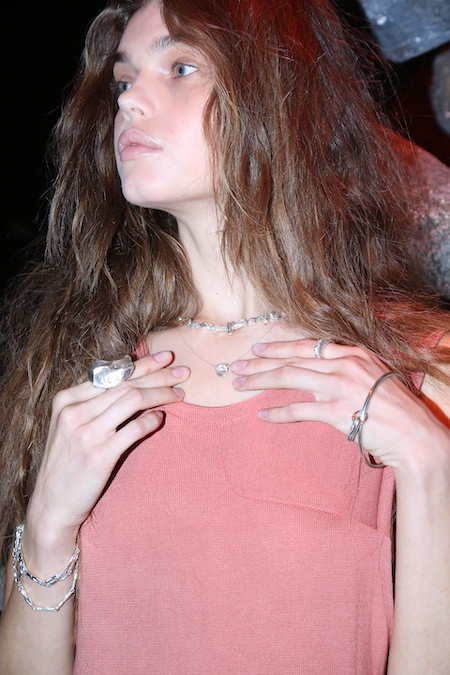
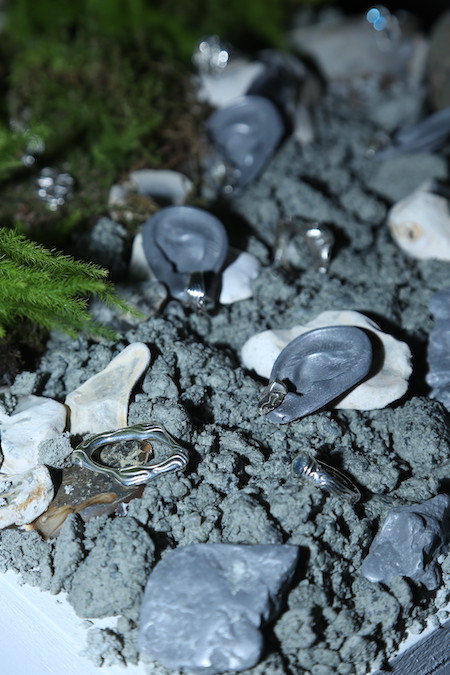
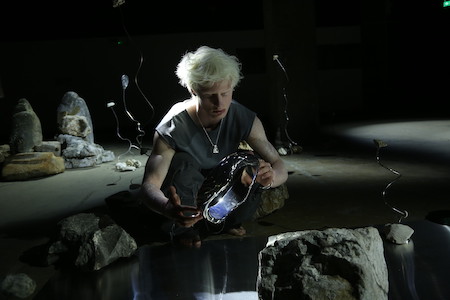
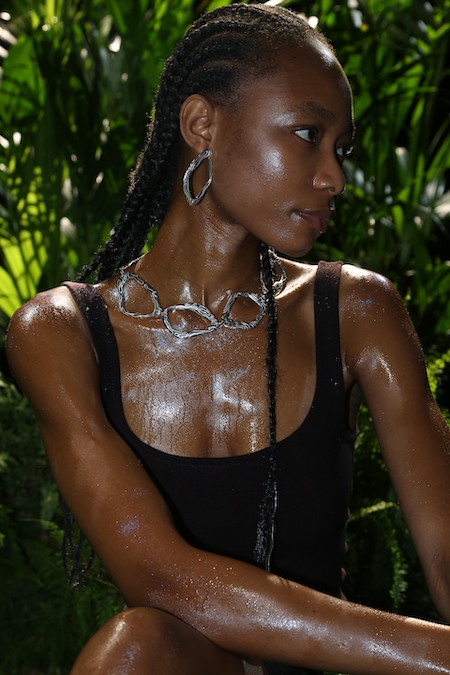
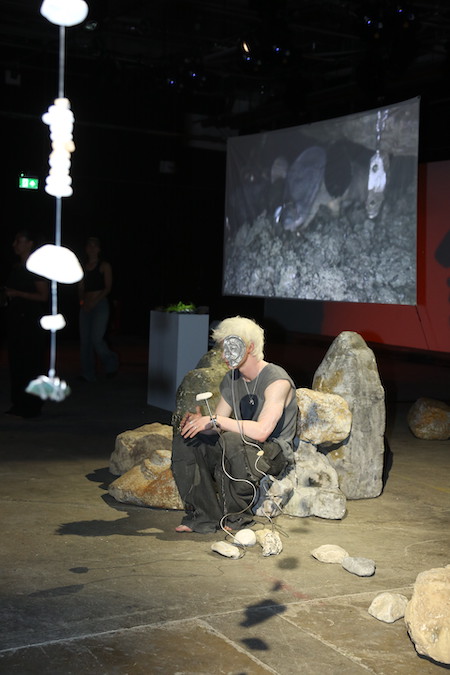
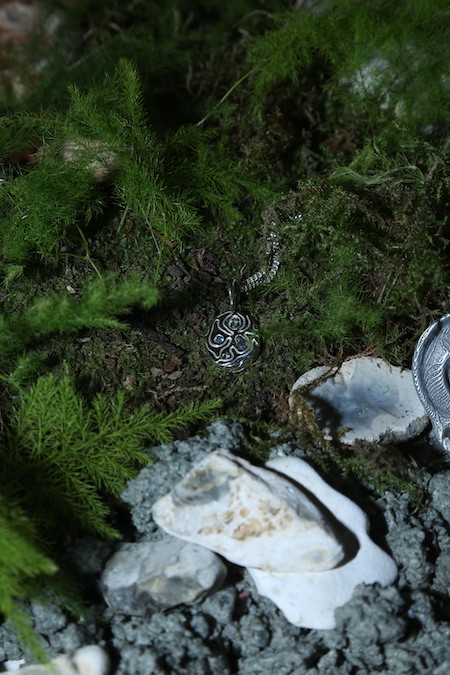
If nature is your means of escapism. Octi’s Summer Spring 2026 collection ‘The Rocks’ will always have a piece of it to take with you. Emerging with a new collection, Octi infuses fragments of nature into lustrous metals. Capturing the ever-changing rhythms of time, erosions and human engagement. A collection inspired by rocks ranging from pebbles to radiant gemstones, the pieces act as a wearable landscape, imitating the textures and patterns from the Uk’s Jurassic Coast.
To bring the concept to life, Octi presents a multi-sensory combination of three islands: The Jurassic island, The Green island and The Floating island. Each evoking a unique scent and climate and visual identity, Octi explores how even the smallest of stone overlooked can be turned into something timeless. Octi’s debut redefines jewellery as not just an accessory but an element of storytelling.
Showcased at the Portuguese Embassy, this is the first time London Fashion week is a seeing fusion amongst London College of Fashion, UAL, and APICCAPS. The Portuguese Footwear Graduate Award winner Annie Purdy emerges in the London fashion scene to unleash her new sleek footwear collection. In partnership with the Portuguese Footwear Association, Purdy uses old Portuguese crafting with a twist of her own inventiveness to create her Six piece collection.
“It was inspired by the relationship between craft and innovation,”
“looking at how traditional shoemaking skills can coexist with experimental, forward-thinking design.”
Annie Purdy
Featuring slender silhouettes, electric metallic greens, and bold browns. The collection draws inspiration from the tension between tradition and innovation, exploring footwear as both an everyday product and a means for storytelling.


Birmingham City University Graduate Presentation
BCU students have been invited to open London Fashion Week, signalling the growing influence of the university on the global fashion scene. This event spotlights the craftsmanship and innovation in Birmingham.
‘The invitation to open LFW is the result of years of dedication from our students, graduates, and staff, as well as a strategic effort to spotlight the Midlands as a region rich in design talent.
The Midlands has long been known for its contribution to textile production and artisanal skills – from Birmingham’s fine tailoring to regional expertise in leatherwork and metalcraft. Our students now have the platform to share that story with the world.’
Joseph Turvey, BA Fashion Design Course Director and BCU graduate
The collections blend storytelling and sustainability with each designer’s individual expertise. Emily Brooks reimagines checks and tailoring through inventive pattern cutting and deadstock fabrics, while Lauren Broxton, rooted in Walsall’s saddle-making heritage, transforms discarded leather into sculptural, contemporary goods. Closing the circle is Charlotte Wood, who challenges luxury fashion’s size barriers with a collection rooted in inclusivity, structure, and empowerment.


Noor By Noor’s Spring Summer 2026 collection draws on a mosaic of inspirations from both memory and art: the independence of Veruschka captured in vintage photographs, childhood moments under desert skies, music that stirred the soul and the romanticism of Pre-Raphaelite paintings.
“Mirage is about the beauty of what you can’t quite hold onto. The shimmer of fabric as it catches the sun, the way a silhouette disappears into light. We wanted the collection to feel like that: delicate, fluid, always changing depending on how you see it.”
Shaikha Noor Al Khalifa
The colour palette is timeless and delicate, drawing on white, pale gold, sand, desert khaki, Bahraini red and girlish, cherry blossom pinks. The fabrication is breezy and light, blending metallic
cotton mixes, cotton silk voiles, linens, silks, viscose silk, challis, silk chiffons and georgette. Embellishments feature cotton cord, handcrafted knotted belts and tops, Noon By Noor
exclusive printed silks, trompe l’oeil appliqué and pintucks.
All those elements in concert seamlessly complement the gentle, refined silhouettes of the garments that work both for the day-to-day and romantic evenings out. The womenswear collection champions freedom, giving its wearer a chance to be both familiar and confidently magnetic.


Di Petsa’s Spring Summer 2026 collection channels the notion that our psyches are complex and are unearthed like ancient temples. It encourages looking inwards, questioning how habits are shaped by experiences: excavation is transformation. The runway becomes a historic landmark where archaeologists set out to find the sculpture of a Moon Goddess.
This season, the metal Ancient Moon bag with its embroidery appears to be washed out by the sea under the moonlight. The collection displays variations of the bag in metallic knit, organza and rattan.
The Wetlook codes are deconstructed into new techniques of layering of silk and jersey ribbons loosely draped across the body, creating a sultry, mythical silhouette. The flowy, often free-form construction of the garments accentuates the natural beauty of the bodies, inviting each to find their inner Goddess.


Jason Lloyd Evans
NZ SS26
HAIR OF THE DOG
We were the Menace, writes Hunter S. Thompson in Fear and Loathing in Las Vegas; not in disguise, but stone-obvious, pushing our act all the way to the limit. It was not mockery, he explained, but a lifestyle, a duty to represent a culture.
Fast forward fifty-two years to the brutish realities of 2025. Ukrainian-born, London-based designer Natasha Zinko stares out through a digital window; Instagram, TikTok; onto a world of performative males, matcha lattes, Pilates in matching sets, and endless -core aesthetics that reproduce themselves across feeds like lifeless mannequins.
As a designer, this troubles you. What makes an outfit interesting? Your mind snaps to the early 2000s: showing up to an exam in last night’s dress, battle-worn from the night before, tired, wired, heels abandoned for flip-flops, yet somehow more authentic than anything meticulously planned.
A survivor’s look; creased, dented, lived-in, heroic. Not curated perfection, but an appearance that tells stories. Yes, the heels hurt so you changed them. Yes, the dress slipped, the glasses bent. Let them see.


A celebration of British heritage and craftsmanship, Patrick McDowell launched his ready-to-wear debut at Battersea Power Station’s Control Room A during London Fashion Week on 20th September 2025. The collection, titled The Lancashire Rose, is the designer’s most intimate to date; a love letter to his grandmother, born in 1923 to a family of fabric weavers in Lancashire. Inspired by her resourcefulness and known as the “Lancashire Rose,” she taught McDowell to sew on her 1950s sewing machine, sparking the foundation of his design journey. Three generations of his family were present in the audience, underscoring the collection’s deeply personal nature.
The show highlighted McDowell’s signature commitment to craftsmanship, circular design, and sustainability. Collaborations with artisans and innovators such as DyeRecycle and Circ brought new life to textiles through recycling technologies, while a capsule of handcrafted hats was created in partnership with The King’s Foundation. Accessories designed with Aspinal of London included limited-edition bags, scarves, and slippers, inspired by McDowell’s personal archive. Each garment carried a scannable digital passport through Certilogo, unlocking traceability, repair, and end-of-life services while also sharing the immersive story of McDowell’s grandmother.
‘Losing someone so close to you is one of the hardest things we endure. Creating this collection was a form of
therapy, of grieving and celebration for my Grandmother.’
The runway music has been beautifully created by celebrated composer Erland Cooper. Recordings of McDowell’s Grandmother intertwine with Cooper’s signature poetic sounds to create a moving and beautiful
backdrop to the collection. Music was directed by Dave Chase.
The location itself amplified the collection’s message. Battersea’s Control Room A, with its restored 1930s marble walls, teak parquet flooring, and original panels, echoed McDowell’s mission of preserving the past while breathing new life into it. The emotional runway soundtrack, created by celebrated composer Erland Cooper and incorporating recordings of McDowell’s grandmother, added a poignant, personal layer to the show.
Through The Lancashire Rose, Patrick McDowell redefined modern British luxury by blending heritage craft, sustainability, and personal storytelling. With support from Broadwick Group, Vibration Production, and partnerships with Casadei, Blooming Haus, and Beautick, the show became both a cultural moment and a manifesto for fashion’s future. Building on accolades such as the Queen Elizabeth II Award for British Design and recognition on the Forbes Europe 30 Under 30 list, McDowell continues to push boundaries, proving that sustainability and artistry can coexist at the highest level of fashion.
“Sustainability is at the core of everything Patrick does, striving to reinvent luxury through a sustainable
mindset.”
Anna Wintour, Vogue.


This Spring/Summer 2026, Lueder invites us to Convivium, a vibrant collection inspired by the energy of gatherings, from carnivals down to football stadiums. Designer Marie Lueder blends drama and desire, taking reference from the likes of Baz Luhrmann’s Romeo and Juliet, this collection fuses passion and rebellion into silhouettes that shift from sculptural to oversized.
The collection features summer-ready pieces like strappy tops, bikinis and vintage football kits, all rooted in Lueder’s sustainable and future-focused approach. The colour palette ranges from sunburnt reds, dusty teals, charcoal, and camo upon cool denims, warm cotton and Nylons.


Ben Montgomery/Chris Yates Media
Ahluwalia’s Spring/Summer 2026 collection roots its concept in nature, and what it implies: its tenderness and intimacy, juxtaposed with turbulence and grandeur. Titled ‘Affinity’, it draws from cinematic depictions of romance: the opulence of Bollywood films, the timeless drama of Shakespearean tales, and the emotional resonance of Motown and R&B ballads.
With its bold colour palette of dark, earthy tones as well as bright, vibrant blues and reds, Ahluwalia echoes the freshness of nature’s renewal. The silhouettes take influence from the sculptor Naum Gabo, with their powerful, yet dainty shapes.
The fabrication is just as special and central to the theme. Draped fabrics twist and knot, suggesting intimacy and connection, but also the gut-wrenching intensity of love. The moments of strain, uncertainty, and emotional turbulence. Sharp tailoring anchors the collection in structure and clarity. Fringe pieces, formed on a mesh body, bring movement and unpredictability to both menswear and womenswear. It combines the fluidity that is so special to spring, with the confidence of a bold garment.


Stefan Knauer and Olivier Cassie
Yaku’s Spring Summer 2026 collection is a fantastical tale, filled with intention and storytelling, reimagining designer Yaku Stapleton’s family as archetypes. The concept takes root in RPG game nostalgia, focusing on three figures within the family:
‘Lorrelle’s guardianship reflects our desire to protect what has been built. Ricky’s pragmatism speaks to the need for resilience in the face of shifting landscapes. Mum’s shapeshifting embodies adaptability – the capacity to hold multiple forms and truths at once.’
Laila Rose
The fabrication has a strong focus on sustainability, using natural materials and elemental textures of the earth. Meanwhile, the colour palette is grounded in water. To reflect the history of the family line, the collection draws upon the Televani, a collective of abstract figures informed by the pre-colonial resistance histories of Jamaica and St. Vincent. The exaggerated proportions of the figures, the silhouettes lie somewhere between body and terrain. They reimagine everyday clothing in a way that turns the catwalk into a mythical tale.


Morgan Williams
Toga enters the Spring Summer 2026 with a vision of turning the ordinary into stand-out pieces, focusing on the versatility of a garment.
‘I hoped to more simply capture things as they are and generate new forms from them.
I wanted to pay attention to details, picking up, for example, the form of a scooped ice cream, transformed upon landing on the ground, as well as the sadness one feels from dropping ice cream.’
Toga
Reimagining familiar floral patterns by making them an element, rather than the centrepiece, Toga’s collection is effortlessly cool. Fabrications vary from leather to sturdy striped shirts to multi-layered trench coats that give the wearer a sense of gravitas. The colour palette is smart, with occasional spring shades of yellow and baby blue, and motifs of off-white and black: shades that reiterate the wearability of the garments.
The final pieces of the collection are sheer, playful dresses. The skirts are an overlay of different fabrics like lace and chiffon, bringing striking volume.


For Spring/Summer 2026, Richard Quinn invites guests to a night at the opera. Staged in the historic Sinfonia Smith Square, the collection unfolds in an immersive world where clothing, sound, and architecture converge. Together they create a living tableau, capturing a fleeting moment of joy and the grandeur of dressing for an occasion.
The evening was accompanied by the world-renowned English Chamber Orchestra, whose music accentuated the emotional and romantic feelings evoked by the collection. As models moved, the garments came alive in concert with the score. Silhouettes echoed orchestral phrasing: sweeping gowns that rose and swelled, precise tailoring that punctuated, and sculptural forms that paused in moments of stillness. This dialogue between delicacy and drama remains a defining signature of Richard Quinn’s identity.
Within walls designed to carry music, the garments too found their resonance, imbuing the space with presence, ceremony, and memory. A synergy emerged between the rise and fall of the music and the movement of the gowns. Each note, each step, became part of the tableau: a night to remember, a moment never to forget, an invitation to live fully in the present.


Ik Aldama
As the war in Ukraine fades from headlines but not from reality, Tamar Keburia returns to the London runway with unheard, a Spring/Summer 2026 collection that speaks through silence.
The show opens with a man, lips taped, hand pressed to his mouth. He is followed by models with the same restraint; no décor, no distraction, only fabric, movement, and breath.
“We’re tired of talking, but that doesn’t mean nothing is happening”
Tamar Keburia
Over 70% of the collection is black, with sculptural silhouettes, architectural pleats, and clean, complex cuts. The mouth becomes the season’s focal point: a symbol of what remains unheard, yet unforgotten.
Founded in 2016, Tamar Keburia is a Kyiv-based brand known for monochrome tailoring and designing for what she calls “Queens of the Metropolis.” Produced in Ukraine, her work has been featured in Vogue, WWD, and Forbes, and is stocked globally from London to Tokyo.


Kateryna Ostapenko
Pauline Dujancourt was inspired by the character of Nina in ‘The Seagull’ by Anton Chekhov when designing this Spring Summer 2026 collection. Nina’s resilience, which in the final monologue is compared to a seagull, and thus the strength takes the form of creativity. The result is a mysterious, feathery collection that embodies the perseverance one needs to survive in moments of darkness.
‘The bird as a symbol sits at the heart of my designs. As I began exploring shapes and volumes, I kept returning to images of birds folding their wings, echoing these curves in my drapes. It reminded me of my mum’s feathery, swan-like wedding dress, too.’
Pauline Dujancourt
The colour palette ranges between dark shades of indigo blue, grey, black, and mother-of-pearl. There is a mysticism found in the silhouettes of the pieces, bridging feathery armour and extravagance. The fabrication employs two hand-knit archetypes: Argyle knit sweaters and crochet “granny squares”. The light yarns are combined with tulle strips to create Dujancourt’s own hybrid versions of these knit icons: light as feathers and vaporous, sensual and feminine.


Aaron Esh’s Spring Summer 2026 collection embraces noir shades, choosing craft and elegance over maximalism. It draws influence from the fashion of London’s people and their ability to style, with statement pieces like trench coats, strict suits, and classy evening dresses.
The fabrication of this collection reiterates the sophistication of the pieces. Silk-lined pockets piped in satin, a shrunken trench in slinky nylon, a leather-trimmed wrap skirt that flatters every hip, perfect with cigarette-leather trousers and slouchy boots. Bias-cut jersey dresses and skirts – modern, urbane – sidestepping the clichés of silk slips.
The colour palette is dark and subdued, and the clothes stand out in their wearability. The shapes of the garments are classics; they focus on bringing out the individual uniqueness of the wearers with its artisanal tailoring.


Fam Irvoll, a Norwegian designer with an eye for vibrancy, maximalism, and colour, brought about an exciting collection that defies the minimalist norms associated with Scandinavian fashion. The runway looks embraced playfulness, accentuating classic black and white pieces with bold, eye-catching shapes.
The collection featured garments with a variety of patterns, such as whimsical polka dots, large chiffon flowers, and 3D embellishments on denim. Fam blends quirky eccentricity with thoughtful themes, melding youthful pop culture, ironic nostalgia, and political femininity into a joyfully crafted fashion grounded in artisanal practice.


“Illusion Ascends”
The collection opens with contrasts: cream pleated tuxedo trousers cropped uptown style, a surplus flight jacket detailed in lilac, moss, and blood orange, and a cap stamped Illusion Ascends. Opposite, an oversized hybrid dress fuses a silk linebacker jersey with a pleated academy skirt, cinched by a leather belt carrying the infinity motif and paired with wedge boots in burgundy.
More than clothes, Illusion Ascends explores retail as culture. With high streets fading, the brand’s own store has become a site of community and identity, echoing the legendary Parachute stores of the ’80s and the street style portraits of Amy Arbus.
The result is a collage of archive and research, styled into living characters drawn from its own retail world. Illusion Ascends proposes that new subcultures will rise again through independent shops, creating fresh languages of style and belonging.


Angus Williams
On 20 September 2025, INF presented its Spring/Summer 2026 collection with Fashion Scout at London Fashion Week. Inspired by the fearless spirit of the 1980s, the collection reimagined athletic wear, tailored suiting, and hip-hop influences through multifunctional designs that adapt and transform. Sustainability was central, with pieces made to be worn in multiple ways, reducing waste while empowering individuality.
Bold prints drawn from the Memphis design movement infused the collection with geometric motifs and optical illusions; nostalgic yet futuristic. Known globally for its philosophy of transformability and cultural reinterpretation, INF continues to push boundaries in sustainable design, securing its place among Not Just a Label’s Global Top 500 brands.


Ready To Wear ‘MuseumWear’
This season feels different. Not because INF set out for spectacle, but because the house set out to share. The last collection was bold; sculptural, inflatable, surreal; a performance admired from a distance. Yet it left a lingering question: how can art be lived, not just observed?
The answer is MuseumWear. Designed as a bridge between the art you marvel at and the art you carry with you, the collection transforms surreal concepts into ready-to-wear freedom. It’s for the gallery wanderers, the curious, the ones who absorb culture and add to it in quiet ways.
More than performance, MuseumWear is about access. Each piece invites you to step into imagination, to claim what once felt untouchable, and to live in the in-between of art and life.


In a compelling tribute to the legacy of Barbara Hepworth, Spring/Summer 2026 collection a sculptural exploration of space, texture, and feelings. Drawing on Hepworth’s expertise of form and space, the collection dismantles traditional garments through slashing and folding. Embedding elements such as velvets and raw raffia blends, delicate wirework, trench coats in silk wool and a zibeline coat. Merging a bold feel with a touch of softness.
Celebrating two decades of Roksanda, the collection also redefines iconic silhouettes from seasons past, including the return of the bold Margot, Anya, and Cataline dresses in fresh palettes and colourful prints. Honouring Roksanda’s ever-changing craftmanship that has solidified their mark in the fashion scene. Set against the lavish backdrop of The Chancery Rosewood’s ballroom.


In a blazing fusion of fantasy and resilience, Hector Maclean’s Spring/Summer 2026 collection, The Girl Who Ate The Dragon yields a lengendary tale of heroism down the London Fashion Week runway.
From pure whites and corseted silhouettes to Joan of Arc-inspired armour dripping in rhinestones, Maclean charts the heroine’s evolution through stained fabrics, blood red hues, and delicate detailing that echo both trauma and triumph. The star of the show were the gowns adorned with 3D printed scales and hardened tailed dragon symbolisms in every stitch, metaphorical of the remains of his foes, an amazing representation of becoming stronger through what you overcome.
“We all face battles. It’s not always a fairytale, but it’s part of existing and surviving. We all get a little bit bloodied and become a bit of a dragon, but it matters what kind of dragon you want to be,”
Hector Maclean
A celebration not just of fashion, but of survival and self-reinvention, the collection is a bold declaration: you may face monsters, but you choose the kind of dragon you become.


Ben Montgomery
Ray Chu’s Spring Summer 2026 collection, inspired by Taiwan’s midnight shores and emotional resilience, fuses cultural narratives with a sustainable design ethos.
The silhouettes of the collection reiterate the unyielding spirit through sharp, structured shoulders and cinched waists. Embellished with Swarovski crystals through hot-fix, layered textile treatments, and bonding techniques, this twist-detail asymmetric evening maxi dress is transformed into a radiant, eye-catching statement.
The fabrication of the pieces consists of plant-based upcycled fabrics, as well as cooling, scented mint-based fabric. Lace detailing, hook-and-stud trims, and sparkling chain embellishments enrich the collection.
The colour palette is striking, with fiery reds, cornflower blue and lemon yellow. Designed with both editorial impact and everyday versatility, the collection champions gender fluidity, inclusivity, and self-expression.


Olu Ogunshakin
The theme of the second collection Molini presented at London Fashion Week 2025 was titled ‘La Seta Baroque’, from the Italian history of baroque.
Shifting slightly from its signature white/cream colour, this collection embraces a varied colour palette of black and resort floral silk. Taking inspiration from the Silk Road Era, the collection highlights the timelessness and luxury of silk as a fabric.
The silk fabric drapes like a waterfall down the body, embracing femininity and elegance. The silhouette is natural and free-flowing, with a sense of freedom that is so entangled with the mood of spring and summer.


Titled ‘The Blossoming’, the collection celebrates freshness and renewal, perfect for spring and summer.
‘Artist David Hockney spoke of returning to England to witness the blossoming of summer, like ‘champagne cascading over the landscape’, how those unrelenting grey winters give way to hazy warmer months that – though fleeting – bring a sense of marvel, and it’s as if the city awakens and breathes new life.’
Daniel Kearns
Opening with a clean palette, the focus is on silhouette and texture. Looks blend technical sportswear with soft tailoring, mixing elegance with nonchalance. Bright pops of red punctuate white, graphic lines offset feminine ruffles, and shapes blossom into an array of metallic and bold silk jacquard florals.
The collection features knitted pieces and delicate semi-transparencies. Meanwhile, relaxed tailoring is presented in an array of colours from sky blue to stormy shades, all while playing with patterns of stripes and checks.


Erdem’s Spring Summer collection looks to an enigmatic historical figure: Helene Smith. Smith was a 19th-century Swiss medium who believed herself to have lived other lives: as a member of the French court, as an Indian princess, and as a traveller among Martian skies. These three incarnations, which psychologist Théodore Flournoy coined as Smith’s ‘romantic cycles’.
‘Smith’s visions were dreamlike and often discredited, yet they reveal a woman continually inventing and reinventing herself through her art. Her story speaks of multiplicity: monarch, mystic, Martian identities overlapping, fractured, and reassembled at the edge of imagination.’
Erdem
The colour palette is exciting and imaginative, just like the psyche of its muse. The acidic pink and green give the historically inspired silhouettes a fresh perspective, thus combining the modern with the traditional. The robes appear regal, while the more experimental dresses and suits toy with sharp angles.
The result is a standout collection that echoes the vibrancy of warmer months, while maintaining a timeless feel with playful yet formal garments.


Jimmy Choo’s JCA MA Collection
The show opened with 3113 by Elle Curzon, then followed up by four other MA designers: Sophie Hollands, Patricia Reis, Grace Emerson, and Jasmyn Lopuszansky.
‘3113’ by Elle Curzon
The collection blends feminine silhouettes with a unisex intention, responding to a growing crisis: rising rates of addiction, alcoholism, smoking, and male suicide, all tied to societal expectations of emotional silence.


Chris Yates
‘A bare c’ by Sophie Hollands
Originating from the coastal marshes of Southeast England, local moods of nature and urban concrete influence the brand’s identity: a fusion of outerwear and relaxed tailoring.


Chris Yates
‘Trixa’ by Patricia Reis
A womenswear brand that reimagines corporate wear, traditional male archetypes of tailoring are embedded with femininity and provocation by blending lingerie details.


‘Rethreaded’ by Grace Emerson
The brand champions the art of reworking, restitching, and redesigning through sustainable menswear and accessories to celebrate beauty found in imperfection.


Chris Yates
‘Lopuszansky’ by Jasmyn Lopuszansky
The debut collection centres around functionality and comfort, putting the blind and visually impaired individuals at the forefront without compromising aesthetics: ‘Fashion made to feel, not just to see’.


Chris Yates
For Tifaret’s Spring Summer 2026 collection, designer Chiyue Dai reflects on both a personal and cultural story of dockland life through the lens of memory, heritage, and transformation. It draws influence from Chiyue’s experience of helping her mother, one of the first women in 1990s Shanghai’s international trade, at the port.
Bridging Shanghai and London, the Chinese and tropical florals, cargo pants, Victorian silhouettes, and sailor tailoring are suggestive of 1930s Shanghai. Delicate designs set reference to sex workers’ pyjama uniforms, while luxurious touches evoke the faded opulence of opium dens, capturing a complex cityscape.
The collection balances elegance and grit, blending Victorian curves with Chinese flat-pattern cutting to create space between body and fabric. With an at times bright and floral, and at others dark and industrial, the colour palette consolidates the juxtaposing realities of dock life with the garments.


Chris Yates
The collection is an imaginative fusion of Victorian grandeur and Nepalese heritage, reimagining what happens when a Newar woman from Kathmandu steps into the heart of the British Empire in 1901.
The fabrication of the pieces has its roots in sustainability through Fair-Trade partnerships with artisans from Nepal. The designer bridges seamlessly between eco-consciousness and luxury.
The silhouettes are dramatic and extravagant, with bold shapes and colours that give the wearer a regal sense of majesty.
The colour palette features rich shades of red, white, black, and gold. The key pieces, such as the hand-embroidered Kumari Gown, hand-printed Ranjana Coat, and a new line of luxury handbags crafted from biodegradable fruit leather and finished with hand-carved Vajra brass handles, encompass craftsmanship and resilience.


Elizabeth Lenthall
Agro Studio’s Spring Summer 2026 collection, titled ‘Prophet’, references tarot and the Joker, combining the confusion and certainty that coexist in the modern age. Couture ball gowns are paired with British school shirting, leather with tulle, and shearling with technical fabrics. The result is harmonious chaos, an aesthetic that has become the AGRO signature.
The colour palette runs soft and muted with flashes of yellow and hand-painted textiles. There is an experimentation and merging of styles, ranging from streetwear to Victorian Gothic and grunge.
In hand with that, artisanal techniques feature traditional corsetry and streetwear finishes to leather craft and hand beading. The silhouettes are cool yet theatrical. Closing looks nod to the era-defining finales of Vivienne Westwood and Dior, where volume, historical referencing and grandeur tipped shows into another world.


Ones-to-Watch LFW SS26 Fashion Scout
This season, Ones To Watch 01 showcases six rising international talents whose work is bound by storytelling, cultural identity, and fearless craftsmanship. From garments that echo the intimacy of skin and the ritual of tattooing, to silhouettes shaped by architecture, heritage, and resilience, the line-up offers an emotionally charged, cross-cultural dialogue in design.


Chris Yates


Chris Yates


Chris Yates


Chris Yates


Chris Yates


Chris Yates
For Spring/Summer 2026, Edeline Lee takes us back to the bygone circus era, with her brand new collection ‘The Circus’ transforming the lavish St. George Ballroom into a dreamscape of theatrics. Drawing inspiration from the early 20th century travelling circus, the collection fuses historical references like demure necklines and Pierrot-inspired ruffled collars with the brand’s signature modern tailoring and high-performance fabrics.
Exaggerated heraldic sashes, shimmering sequins, and dynamic fringes evoke the flamboyance of circus performers. Lee uses pastel-hued stripes and circular hems to echo the same essence of the Big Top in a sophisticated manner. Each piece is a visual ode to spectacle and fleeting beauty, designed to both dazzle and move.
Marking a new chapter for the brand, this season also introduces Edeline Lee’s debut knitwear capsule, an innovative blend of heritage, craftsmanship and contemporary utility. The collection features reimagined twin sets and structural knit reinterpretations of classic silhouettes tailored for the “Future Lady.” Including a refined palette of Slate Grey, Laguna Blue, minty pastels, and so much more.


For its Spring Summer 2026 collection, Apujan relied on a cinematic and poetic narrative, blending fantasy, literature, and social commentary. Taking inspiration from Japanese folklore tale ‘Momotaro’, it used the story’s main character – a peach that defeats demons on a distant island, as a metaphor for contemporary life. The result is a collection that explores resilience and identity, while embedding the stories literary enthusiasts know and love.
Apujan’s signature design language was present throughout: flowing printed chiffon dresses, lightweight summer knits, intricate custom jacquard fabrics, structured technical sportswear, and sculptural formal wear. The brand continued to blur the lines between East and West.
The garments were filled with coded details, hidden narratives woven directly into the fabric. Various forms of ghosts appeared in the garments, symbolizing the self-doubt and anxiety of today’s social media age.


Chris Daw
Alisadudaj’s collection is rooted in Albanian tradition yet unapologetically modern; the collection channels heritage into a language that feels fresh, minimal, and commanding. Titled ‘Silver Engravings’, the collection is inspired by Albanian craft culture of wood carving, embroidery and objects that carry memory.
Her great-grandfather’s pieces, made entirely by hand, appeared like paintings but revealed themselves as thousands of slivers of straw pieced together with obsessive patience. She translates this artisanal dedication into her own collection.
Silent Engravings is built from natural fibres, with wool at its core. Traditional techniques, wet felting, embroidery, and hand knitting are reimagined through a contemporary lens, realised in close collaboration with local artisans.
The colour palette resembles snow, with its crystal-white hue and occasional highlights of black. The result is tactile, sculptural pieces that feel alive in their making and enduring in their presence.


This season, the selected designers Chih-Wen Kuo, Juan-Juan Xu, Yi-Zhen Lin, and Ying Chu bring distinct perspectives that blend Taiwan’s cultural heritage with bold creativity and technical innovation.
Chih-Wen Kuo
Each knot or stitch acts as a metaphor, marking an event, a memory, or a moment in time, and recalls the ancient
practice of recording with knotted cords.


Eia Hopkinson
Juan-Juan Xu
Inspired by the dynamics of distance and connection between people, the collection visualises interpersonal tension through shifting silhouettes and evolving patterns.


Eia Hopkinson
Yi-Zhen Lin
Focusing on ribbed knits, ‘Vivid Swirl’ uses colour blocking and playful misalignments to evoke the shifting, mesmerising visuals of a kaleidoscope.


Gabrielle Thomas
Ying Chu
Using knitted structures in black, grey, and white that dissolve into shifting gradients, the collection explores presence and absence, shaping a physical narrative of loss and rebirth through the garments.


Gabrielle Thomas
Fashion Scout’s Ones To Watch 2 SS26
Yonzu
Mixing contrasting materials and unexpected structures, Yonzu’s collection embraces hybridity and contradiction.


Focusing on experimentalism and sustainability, the collection uses rainfall-dyed textiles and ceramic accessories.


The collection explores love in all its forms: innocence, passion, fragility, and strength, utilising refined Italian fabrics.


The collection looks to responsibly-sourced wool to create elegant garments that are simple, yet feminine and timeless.


Drawing influence from the Rorschach inkblot test, the Spring Summer 2026 collection explores perception and the subconscious through ambiguous silhouettes.


Embracing maximalism with the motto ‘more is more’, creating garments that are pieces of art in themselves.


Resistance and freedom are the informants of this collection: strength meets fragility, silence encounters voice, structure bends into fluidity.
The silhouettes are unconventional, with tailored shoulders dissolve into silk transparencies, strict cuts unravel into organic drapes, and unfinished edges reject polish in favour of honesty.
The fabrication communicates the contradiction of the collection, with silks representing fragility, cotton wools for grounding, and sculptural taffeta for shine. Deadstock and recycled textiles return as reimagined “ghost fabrics”, stories of renewal and resilience.
The colour palette is juxtaposing, with muted greens, maroons, and earthy neutrals, as well as saturated hues, and luminous transparencies. Silhouettes sway between defiance and surrender. Shoulders, once sculpted and rigid, dissolve into weightless transparencies. Sequenced details capture light, recalling the liberation of the 1970s dance floor and the assertive power shapes of the 1980s corporate battlefield.


Charlie Constantinou’s SS26 collection charts a deliberate passage from night into day. Various historical references appear throughout, drawn from medieval Europe, the Middle East and East Asia. Echoes of armour in a shoulder line, or geometric patterning within fabric treatments, give the garments a sense of history without direct reproduction
This season opens in dark tones of graphite greys, the collection then moves through washed blues and turquoise, earthier browns and greens, before reaching flashes of reds and purples.
The fabrications feature linens and cottons, combined with technical fabrics to give light garments new weight and resilience. Surfaces are treated with hand-brushed inks, warped through puff printing, and dyed into irregular palettes, producing clothes that carry their own tactility and variation.


This season’s conceptual inspiration is drawn from the 18th-century Eastern literary classic, Dream of the Red Chamber. This classical inspiration materialises in a deep appreciation for East Asian sartorial sensuality.
With exaggerated tailoring and gothic style, Jenn Lee blends East Asian aesthetics with textures that resemble paper fans and folding screens, conveying strength in stillness. From the precise starch-setting that shapes the form to the painstakingly hand-tied knot buttons, these pieces embody dedication and skill, with delicate piping and hand-finished seams refining the silhouette.
The colour palette focuses on darker shades of crow black, powdery brown, as well as white and red. The collection is rebellious yet sensual, combining a dark edge with a sense of elegance and refinement.


“Serendipity”
The collection is a seasonless homage to community, chance, and creativity, drawing inspiration from magpies; their striking monochrome palette and instinct for collecting treasures. Gold accents ran through the designs, symbolising richness, connection, and discovery.
Black’s SS26 line refined her signature approach to elevated basics and timeless classics, including tailored blazers, coats, dresses, skirts, and trousers. Each piece was crafted in the UK with sustainably sourced natural fibres and deadstock fabrics.
The brand’s recurring safety pin motif appeared throughout the collection, representing community and paying tribute to Olivia’s Nana, a seamstress at the heart of the label’s identity.
With “Serendipity”, Olivia Black continues to fuse sustainability, storytelling, and timeless design, affirming her place as one of fashion’s most compelling voices.


Tommarshak
“UTC+0”
Ksenia Schnaider made its London Fashion Week catwalk debut with the Spring/Summer 2026 collection, UTC+0, led by co-founder Anton Schnaider. Continuing the brand’s philosophy of “design minus design”—reuse, recycle, upcycle—the collection explores what it means, and how it looks, to be a modern human.
UTC+0 reflects on form, stereotypes, and the garment itself, combining upcycling, distorted denim, AI experiments, deconstruction, patchwork, sheer organza, and certified sustainable textiles by Indigo Textile. Pieces range from reworked bombers, trenches, and embroidered shirts to denim experiments and tailored silhouettes.
This season marks a capsule collaboration with Lee Cooper, the Original British Denim brand, uniting Lee Cooper’s heritage with Schnaider’s avant-garde aesthetic. The capsule features four women’s and six men’s looks, crafted from upcycled Lee Cooper denim in the brand’s Kyiv studio, reintroducing menswear to Ksenia Schnaider’s line-up.
The collection also continues the label’s viral Cubic Denim series, applying its radical “in-the-box” philosophy to exaggerated, architectural silhouettes across denim, shirts, and trousers.
With UTC+0, Ksenia Schnaider challenges conventions of branding, silhouette, and logic of dressing; delivering a debut that bridges heritage craftsmanship, sustainability, and innovation for a new era of fashion.


Unity in Design Global Network SS26
London, UK – September 2025 – Unity in Design Global Network (UDGN) unveiled its Cultural Threads runway, a dynamic presentation spotlighting craftsmanship, heritage, and the creative power of minority-led design. The showcase introduced a new era of fashion storytelling, where underrepresented designers use the runway as a canvas for identity, memory, and future-making.
UDGN (Unity in Design Global Network) is a trailblazing fashion platform reimagining the future of the industry by centering the visions, voices, and stories of minority designers worldwide. Operating as both a CIC and Ltd. entity, UDGN provides technical support, business development, wellness care, and high-level PR through its unique incubator-to-showcase model.
With Cultural Threads, UDGN continues its mission to champion global minority talent, redefining the runway as a space of innovation, empowerment, and inclusivity.


Maja Smiejkowska
Air-Evolution
Designer Susan Fang unveiled her Spring/Summer 2026 collection, Air-Evolution, a visionary narrative blending philosophy, technology, and craft. Inspired by Fang’s original story of Nasus, an 11-year-old narrator from the year 5202, the collection imagines a future where clothing amplifies human senses and harmonizes with nature.
The garments draw on themes of flow, transformation, and simulation, with optical illusion prints, surreal bridal elements, feather embroidery, and innovative techniques such as the “beaded bubble smock” and “air-puzzle” constructions. These methods create voluminous, fluid forms that breathe with the body. Signature air-flowers, hand-beaded bubbles, crystals, and crochet blooms further expand Fang’s poetic craft vocabulary.
Accessories and footwear, led by Fang’s husband Orelio De Jonghe, push boundaries through experimental 3D printing and computational design, producing coral- and fungi-inspired bags, eyewear, and even a full dress that appears alive in motion. Collaborations with Nike, Melissa, and Rockfish extend the collection into playful yet futuristic footwear, merging memory, nature, and dreamlike growth systems.
The immersive show experience transformed the Barbican Conservatory into the imagined world of 5202 with bubble spaceship set designs by XL Architects, a Penhaligon’s scent installation, and live steel pan music. Dancer Kat Collings added movement to Fang’s multisensory vision.
With Air-Evolution, Susan Fang redefines fashion as a medium of presence, love, and sensory expansion; an invitation to evolve perception at the intersection of nature, technology, and emotion.


APAR introduces Edition_004, its latest collection unveiled through a short film that channels the spirit of the late 19th century Decadent movement. The film examines identity and self-expression through the rituals of dressing and undressing, while celebrating eccentricity, and the playfulness of style. As with each of the label’s past collections, Edition_004 is ever changing, drawing inspiration this season from Aldo Fallai’s iconic photographs of the late 1970s and early 1980s that documented Giorgio Armani’s transformative work.
Edition_004 rips the runway with its earth tones, balanced with its silken headscarves, while bursting with fuchsia and ivory. edition_004 collection further decorates the show with its denim peacoat offering a fresh take on a winter classic. Tailored coats and corseted trousers are styled as evening wear, paired with silk boxer shorts to create a subversive edge. Through the film, APAR frames these pieces in a way that examines gender roles, power dynamics and the transformative nature of fashion.
At London Fashion Week SS26, designer HENGDI WANG makes a powerful debut with Exogenesis, a collection that fuses mythology, futurism, and digital craft into a bold new vision of the future human identity. Inspired by the exogenous origins of life,
“Exogenesis imagines clothing not merely as clothing but as vessels of memory, means of survival, and a fusion of the cosmic and the human.
Hengdi Wang
The collection uses 3D-printed textiles and metals, inscribed with sacred geometry and nebula imagery to mimic bones, scales, and exoskeletons in hopes to merg toughness with weakness. Embroidery and jacquard are redefined as vessels of information, interwoven with digital algorithms to create an aesthetic that lives simultaneously in the ancient past and an imagined future. With Exogenesis, Hengdi Wang offers not just fashion, but a mythic narrative for a post human age.


Malone Souliers unveiled its Spring/Summer 2026 collection with a presentation at Space House as part of the official London Fashion Week calendar. Guests included Naomie Harris, Laura Haddock, Evie Templeton, Amber Anderson, Adelayo Adedayo, Lauren Lyle etc many of whom arrived wearing signature Malone Souliers shoes and handbags. High above the city on the 17th floor of the Brutalist landmark, the circular venue was transformed into a reflective gallery space with beautiful views of London’s skyline.The SS26 collection drew inspiration from the late 1960s and early 1970s, channeling an era defined by freedom, playfulness, and unapologetic femininity. A floral installation by London-based studio Athlyn evoked a meadow of clustered white blooms, creating a dialogue between structure and organic form.
“We envisioned the presentation as a palate cleanser, a space to spotlight the creative freedom that defines this season”
Malone Souliers
To showcase this collection against the London skyline feels like a tribute to the city where Malone Souliers was born. Floral embellishments dressed in pure whites, bold to warm colours and staple prints created a flirty and feminine touch colours decorated the presentation.


London, UK – September 2025 – At London Fashion Week, Dylon & Marques ‘Almeida unveiled a seven-look capsule collection in partnership with Dylon Detergent, with each piece treated using Dylon’s Triple Renew formula. Designed to clean gently, revitalise colour, and renew fibres, the collaboration highlights how proper care extends the life of garments, aligning with both brands’ shared mission to rethink fashion’s future.
On the catwalk and front row, the theme of intergenerational fashion was brought to life. Models from the Dylon & Marques ‘Almeida community showcased timeless pieces styled across generations, while Dylon ambassador Rochelle Humes wore an archive look, she plans to pass on to her daughter.
“Our clothes are made to hold memories and be cherished, not discarded,” said Marta Marques, Brand Founder. “Partnering with Dylon allows us to help customers extend the life of their favourite pieces, keeping them fresh and wearable for years to come.”
The show at Floor 59, 22 Bishopsgate was attended by media, influencers, and VIPs, reinforcing a growing cultural shift: while 81% of Brits admit to owning unworn clothes, younger generations are increasingly embracing vintage and passed-down fashion.
Antonia Wigan, Commercial Director at the British Fashion Council, added: “The collaboration between Dylon & Marques ‘Almeida and Dylon demonstrate how creativity and innovation can be used to extend the life of clothes, showing how fashion can embrace longevity while celebrating design.”


The fabric speaks as both witness and archive, its woven body carrying history, migration, revolt, and desire. Dyed in the red of resistance, the pink of dream cities, the navy blue of indigo; India’s fateful gift to global trade; it becomes more than textile: it is testimony.
Tie-dye emerges not as trend but as manifesto. Madras checks cross literal and metaphorical borders, a symbol of movement, exchange, and survival. This cloth is “cross-cultural by necessity,” stitched as an antidote to nationalism and anti-migrant rhetoric, a shimmering love letter from one homeland to another.
Onto its surface, a million sequins are sewn. Tiny mirrors, they blur and reflect troubled times, becoming ciphers; humble coins of entry into the church of glamour. These sequins speak not of frivolity, but of resilience: every glint a rebellion, every stitch a message of endurance. Brown hands across oceans sew these coded strands, each one a letter of love carried to foreign lands.
And then, in motion, transformation: the cloth moves on the body of a dancer. In trance, in sweat, in ecstasy, it ceases to be fabric and becomes atmosphere. Seams turn to sensuality. Glittering surfaces refract not just light but defiance.
This is not merely fashion. It is survival couture. It is the poetry of resistance, embroidered into being.


Chris Yates
Hero Look: Air and Stripes
The hero look from Air and Stripes stands boldly at the crossroads of urban modernity and cultural heritage. An olive-green grandad collar shirt in lightweight cotton grounds the look with quiet strength, while cowrie shell buttons add symbolic resonance. The cufflink-ready sleeves hint at versatility, moving the shirt beyond casualwear.
Paired with striped Aso-Oke shorts, the ensemble gains vibrant energy through vertical stripes and frayed hems that suggest raw craftsmanship. Yet, the shorts’ bold palette risks clashing with the shirt’s muted tone, creating a tension that feels both intentional and unresolved.
The cowrie-adorned hat acts as a cultural anchor, reimagined with a tassel to bring ceremonial headwear into the present. Strong in symbolism and rich in detail, the look declares identity and pride. While slightly conflicted in balance, it advances the dialogue of African craft as modern fashion language, affirming fashion’s power as cultural storytelling.


Follow us: