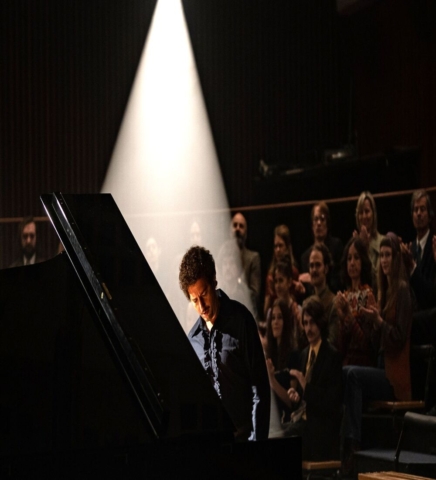
Human Experience Enveloped in Shakespeare’s Works. The New Othello
Is it fair to say that William Shakespeare remains one of the most powerful interpreters of the human condition ever to grace any stage? Could his work feel a little like holding a mirror to reflect the glories and failings of humans, the wins and losses, the joys and tears, the personal gamut of human emotion? Shakespeare, through his characters, wrote about people from different walks of life, kings, queens, nobles, and those of ordinary social status. Through his works, he encompassed the full range of human experiences and emotions. Maybe that is why he is eternally re-explored, in books, art and films; offering multiple angles, and new interpretations one of which is a new production of Othello starring David Harewood,Caitlin Fitzgerald and Toby Jones. Just this year, for example, there are three new pieces, one about his life and two new takes on his famous works. Let’s then take a seat to see on display the Human Experience enveloped in Shakespeare’s Works. The New Othello
How Modern Adaptations of Shakespeare’s Works Keep the Human Condition Alive
We’ve seen gender-swapped Hamlets, hip-hop-infused Much Ado About Nothing, global reinterpretations of The Tempest, and Macbeth reimagined through the lens of trauma and mental health, all these reinterpreted to meet even those who did not think Shakespeare plays related to them. The last several decades have seen Shakespeare reborn again and again. Directors have torn down the walls of traditional staging and rebuilt the stories for new worlds, digital, dystopian, psychological, and political. Shareskpeare it seems, is eternal, so much so that it allows his plays to be reconstructed for each modern era, reflecting the morals, more human codes we live by, whenever the time frame.
“I kissed thee ere I killed thee: no way but this, Killing myself, to die upon a kiss.” (Othello, Act 5, Scene 2).

Just as we do today, Shakespeare’s characters move through the full spectrum of human experience, beginning with the innocence of youth, the thrill of first love, and the wonder of discovery, and descending into the darker territories of guilt, grief, loss, hatred, prejudice, persecution, and rebellion.
His worlds shift effortlessly from quiet domestic rooms to the chaos of battlefields. We watch lovers bloom, and tyrants unravel; we witness tenderness, betrayal, devotion, and violence. And yet, Shakespeare never leaves us in the shadows alone; his world is a human compass of emotions because he understood that the human journey is always a dance between light and darkness, good and bad, joy and despair, hope and every other facet of human behaviour.

And yet, through all these transformations, the core remains the same: Shakespeare understood people. He understood fear, desire, ambition, grief, and the quiet, trembling hope that keeps us moving through the world. This new Othello joins that lineage of reinvention, not as a novelty, but as a necessity.
Why Othello still cuts deep
Every generation believes it has discovered the true meaning of Othello, only to realise that the play has been waiting for them all along, quietly holding up a mirror to whatever anxieties, prejudices, and desires define their era. That’s the unsettling magic of Shakespeare: his work doesn’t change, we do, and yet somehow his characters always seem to know us before we know ourselves. Shakespeare understood the human condition with a clarity that still feels almost intrusive: our longing to belong, our fear of betrayal, our hunger for love, our vulnerability to manipulation.
These emotions are not tied to class, culture, or geography; they are the universal pulse of being human. Whether in a 17th‑century Venetian court or a 21st‑century digital world, the same insecurities flare, the same jealousies burn, the same fragile hopes rise and fall. That is why Othello keeps returning to us, and why we keep returning to it: because its truths are not historical, but eternal.
The film will be released worldwide in cinemas from 4 March 2026. Audiences will leave the cinema changed, not because they watched a Shakespeare adaptation, but because they witnessed a human story told with unflinching truth and honesty. A reminder that Shakespeare is not a playwright we revisit out of duty, but a force we return to because he keeps finding us, whoever we are, whatever age we live in, whatever wounds we carry. Here he again returns on stage as Shakespeare’s Othello, one of his most devastating dissections of what it means to be human.
The actor David Harewood’s presence in the title role brings a new urgency to this emotional terrain. Play one of Shakespeare’s famous black characters, his Othello is not a distant historical figure but a man caught in the crosscurrents of identity, power, and perception, issues that echo loudly in today’s world.

With actor Toby Jones, and his uncanny ability to inhabit the shadows of the human psyche, he promises an Iago who is not a villain of the past but a chillingly familiar manipulator of the present. And with actor Caitlin Fitzgerald’s Desdemona offering the emotional clarity that makes the tragedy’s final moments feel devastatingly intimate. This is Shakespeare not as literature, but as lived experience.
Why do we keep revisiting Shakespeare
There is a reason filmmakers, playwrights, and audiences keep circling back to Shakespeare like moths to a flame. It isn’t nostalgia. It isn’t tradition. It’s because Shakespeare refuses to give us answers. Instead, he gives us questions, beautiful, painful, necessary questions, and invites us to wrestle with them.
He doesn’t explain jealousy; he lets us watch it consume a man.
He doesn’t define love; he lets us feel its tenderness and its fragility.
He doesn’t moralise about manipulation; he lets us witness its slow, poisonous bloom.
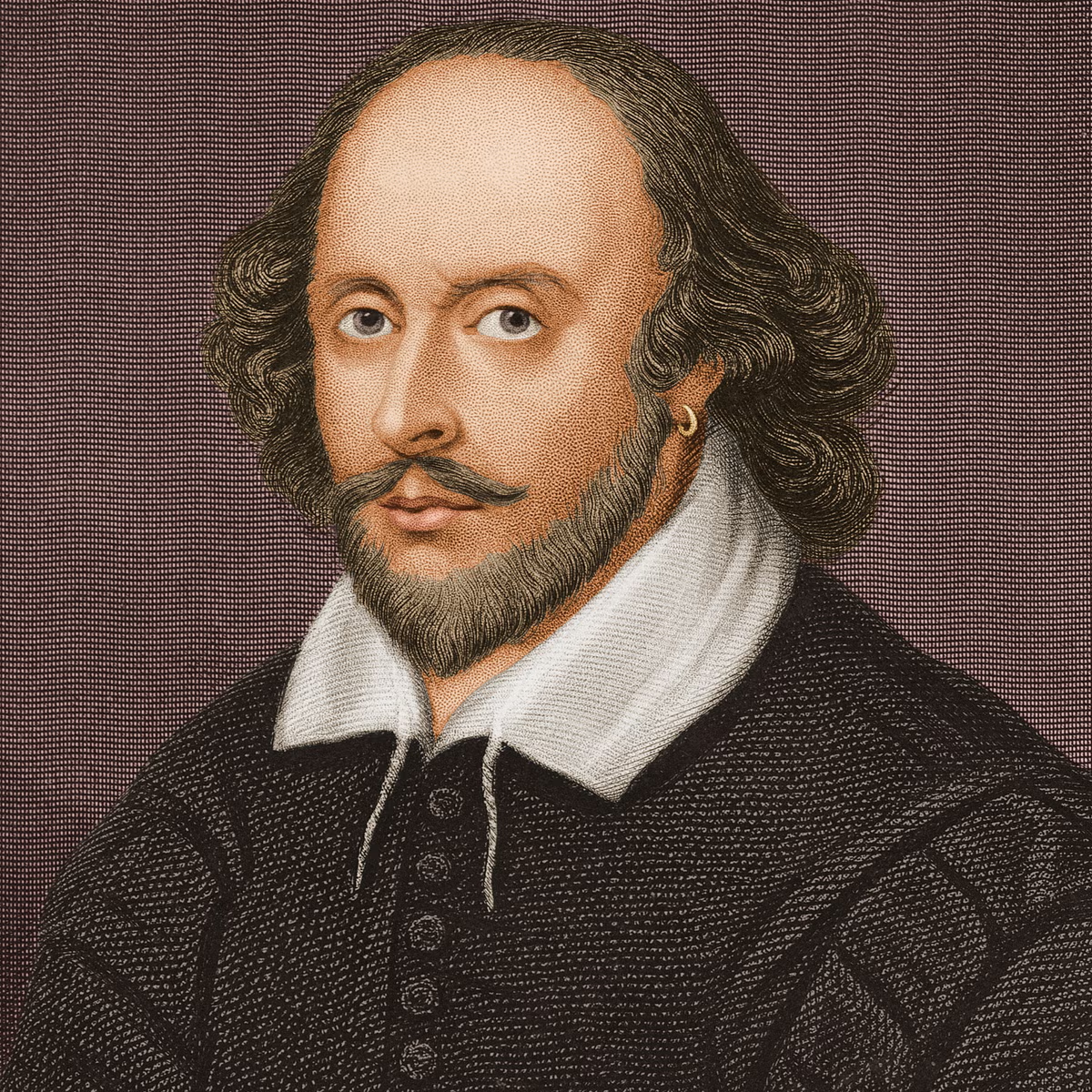
This creative openness is why his works remain endlessly adaptable. Every era finds its own reflection in his plays. Every generation discovers new wounds, new fears, new desires in his characters. Shakespeare’s creativity is not a relic, it is a living force that continues to shape how we understand ourselves.
When Shakespeare Walks the Runway: Wolf & Badger x HAMNET Unveil a Heritage‑Driven Fashion Story
Wolf & Badger are excited to announce a new partnership with Hamnet, a collaboration that celebrates a shared love of nature, the arts and British heritage. Rooted in the UK, Hamnet draws deeply from Shakespeare’s life and legacy, not only in storytelling, but in the way his influence continues to ripple through culture, design and even contemporary fashion, while London-born Wolf & Badger remains a champion of independent craftsmanship.

Inspired by the natural world and the sculptural elegance of Elizabethan dress, the Wolf & Badger x Hamnet edit blends avant‑garde silhouettes, natural fibres and delicate lacework that echo the poetic drama of Shakespearean costume. As a certified B Corp, Wolf & Badger’s commitment to protecting the planet aligns seamlessly with Chloé Zhao’s vision of nature as a force to be honoured, respected and never ignored, making this collaboration a modern tribute to the timeless creativity that Shakespeare sparked centuries ago.
The new film Hamnet, about William Shakespeare’s family, focuses on the devastating loss of their 11-year-old son, Hamnet, to the plague and how this grief shaped Shakespeare’s life and inspired his masterpiece, Hamlet. It is in cinemas now.
In the end, everything circles back to the same truth: Shakespeare endures because he understood us long before we understood ourselves. Whether through the raw psychological unravelling of Othello, the reinvention of his stories on modern stages and screens, or even the way his legacy quietly shapes contemporary fashion and design, his work continues to pulse through our culture with startling relevance. Each new generation approaches Shakespeare thinking they are discovering something new, only to find that his worlds have been patiently waiting, ready to reflect their fears, desires, insecurities and hopes with unnerving clarity.
The 2026 reimagining of Othello is a poignant reminder that Shakespeare’s insights are not relics but living forces, capable of transforming how we perceive ourselves and the world around us. His characters breathe with our anxieties, our longings, our contradictions; his stories move with the same light and shadow that define every human life. And as long as we continue to search for meaning, belonging and truth, Shakespeare will remain not just relevant, but essential, a timeless companion in the ongoing story of what it means to be human.
If you enjoyed reading Human Experience Enveloped in Shakespeare’s Works. The New Othello, why not read Envelop Yourself in Self Love This January
.Cent magazine, London. Luxury Mindset
Follow us: