What Happens When World Cities Unite to Breathe Clean?
The noise first hits you, a hubbub of colliding sound, engines, screams, music and then the scent hits your nostrils, gas, smoke, food, rubbish; an onslaught of senses goes into overdrive. You are in a city, but what constitutes a city? Over the years, there have been massive movements from the suburbs to the cities. This concentration has had significant adverse effects, which we have all noticed. Including pollution, carbon emissions, and the urban heat island effect, among others. But What Happens When World Cities Unite to Breathe Clean?
It may not be obvious, but there is actually no universally agreed-upon definition of a city. In a much narrower sense, a city could be seen as a permanent and densely populated place with administrative boundaries whose members work primarily on non-agricultural tasks.
In the UK, its status was actually a bestowed title from the Crown; It was the royal family who decreed whether you lived in a city or not. Historically linked to cathedrals and universities, yet now they only require a large population and a distinct identity. Often filled ot the brink with people, places, experiences, tall buildings, parks and much in the way of entertainment; you know what a Friday night out in the city is like. But we cannot talk about cities without mentioning extensive systems for housing, transportation, sanitation, utilities, land use, and communication.
What if Global Cities Could Dream?
It may be hard to think that world cities can come together to talk about their climates. Dreaming of making their cities breathe clean air, free of pollution and carbon emissions. Well, while we may still be pondering about it, Mayors of cities around the world have already been uniting under an urban climate movement: C40 Cities. A global network of nearly 100 of the world’s leading cities came together to rewrite their environmental destiny.
From London to Lagos, Tokyo to Toronto, these cities have agreed on one thing: the future must be green, and they must build it together. In a world often divided, C40 serves as a reminder that cities, despite their differences, can unite around a common goal: a liveable planet.

These city mayors sit around a table not just to share the climatic problems plaguing their different regions. But spark discussions which go far beyond policies, come up with strategies to cut emissions, support climate change, spark collaborations to transform buildings where people live, work and gather to be more green with cleaner air.
By tackling both the energy buildings use every day and the hidden carbon in the materials used for construction, these cities are reshaping the places that shape our lives. And for society, the benefits feel close and personal: cooler homes, cleaner air, safer streets, and neighbourhoods that breathe easier.
Through this collective creativity, cities aren’t just trading strategies; they’re trading hope. They’re proving that a greener future grows stronger when imagined together.
Superblocks and 15-Minute Cities
Imagine stepping outside your home and finding everything you need, schools, parks, cafés, and clinics, just a short walk away. No traffic roar, no fumes, just people reclaiming the streets. The idea of Superblocks and the 15‑Minute City has transformed how cities think about mobility, community, and climate action.
What began as an experiment in Barcelona, grouping nine city blocks into one “superblock” and restricting through‑traffic, quickly revealed how urban design can become a powerful climate tool. This strategy requires no demolition or major new infrastructure, only a shift in priorities: people first, cars second. Carbon emissions fall, active travel rises, and community bonds grow stronger. Cities from Buenos Aires to Seoul are now embracing the model, proving it is flexible, scalable, and deeply impactful

Running parallel to this is the rise of the 15-Minute City, a concept popularised in Paris but now embraced globally. An idea that every city should be able to access essential services like schools, parks, groceries, healthcare, and workplaces within a 15-minute walk or a bicycle ride. A vision of proximity, convenience, and sustainability woven together. This reduces reliance on cars, cuts emissions, and supports local economies.

Both Superblocks and 15‑Minute Cities share a simple, human‑centred belief: cities should be built at the scale of everyday life, not at the speed of vehicles. They remind us that climate action doesn’t always begin with grand gestures. Sometimes it starts with quieter streets, shorter distances, and neighbourhoods that function as ecosystems of connection, places where people feel closer to each other, and to the city they call home.
Cool Roofs and Green Roofs: Turning the Skyline Into a Climate Solution
As cities search for creative ways to cut emissions and adapt to rising temperatures, one surprisingly powerful solution is sitting right above our heads: the roof.
Cool Roofing: Picture a city under a harsh summer sun with dark rooftops. The house will absorb heat all day, and the heat will be radiated all night long at approximately 65–90°C. Now imagine a rooftop painted white, reflecting sunlight like quiet mirrors. Heat will not be absorbed into the building, they will be 20–30°C cooler. Cooler roofs mean quieter air‑conditioners, lower electricity use, and fewer emissions. Neighbourhoods soften as the heat island effect fades. Evening walks feel gentler. Homes stay comfortable without the constant hum of cooling systems.

And the beauty of this solution is its simplicity. No major construction—just a reflective coat of paint. It’s cheap, fast, and effective immediately. Cities like New York and Los Angeles have already brightened millions of square feet of rooftop, proving that sometimes the easiest ideas make the biggest difference.
Green Roofing: You’re in a city, looking up and seeing rooftops not of concrete and metal, but a garden, and small shrubs swaying gently above the streets. Green roofs bring nature back into the urban core, turning empty rooftops into miniature ecosystems in the sky. They don’t just cool buildings; they breathe life into the city. These living layers regulate temperature naturally. Plants absorb sunlight, release moisture, and create a cooling effect that softens the heat both inside the building and in the air around it.

When rain falls, green roofs act like sponges, soaking up water, easing pressure on drainage systems, and reducing the risk of flooding.
Their benefits stretch far beyond climate control. Vegetation filters pollutants, improving the air people breathe. Birds, insects, and pollinators find new habitats high above the streets, boosting urban biodiversity. Cities like Toronto, Paris, and Singapore have embraced this idea, transforming rooftops into gardens, farms, and even peaceful public spaces.
Though white roofs and green roofs may seem like opposites, one reflecting heat, the other absorbing it, they share a common purpose: cooling cities, cutting emissions, and strengthening urban resilience. Together, they show how even the most overlooked surfaces can become powerful tools for a greener future.
Climate Budgeting: When Emissions Become a Line Item
What if a city treated carbon the way it treats money, not as an abstract worry, but as something you can measure, allocate, limit, and account for? That’s the idea behind a climate budget. It works like a financial one, but instead of asking “How much can we spend?” it asks “How much can we emit?” Every department, roads, transport, buildings, waste, receives an emissions allowance alongside its monetary budget, and each is responsible for staying within its limits.
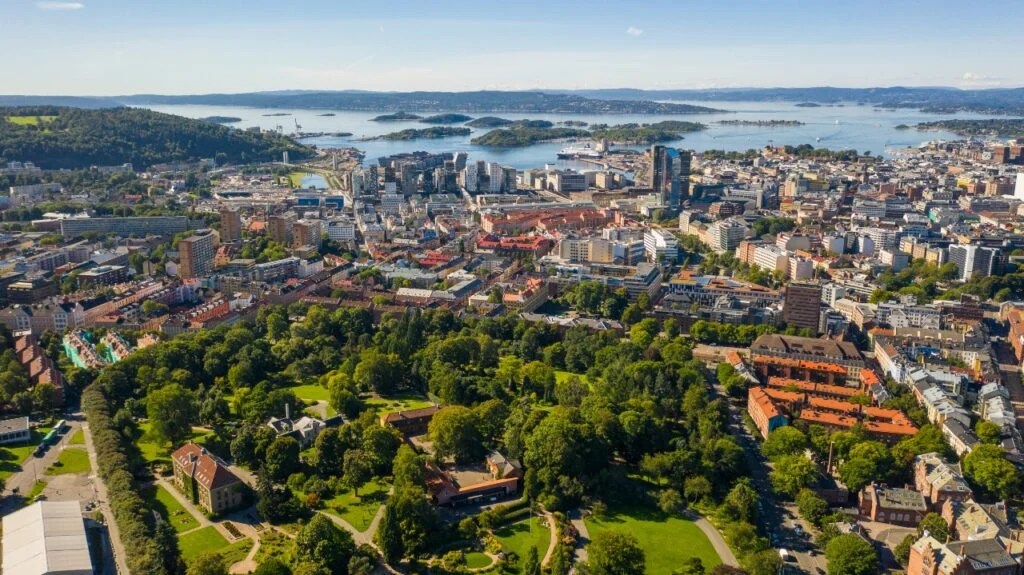
Progress is tracked throughout the year. If emissions rise, departments must adjust their activities just as they would if they overspent financially. And that pressure sparks creativity. Transport teams explore electric fleets, building departments speed up retrofits, and waste managers rethink how the city collects and recycles.
Climate budgeting doesn’t just cut emissions, it reshapes how a city thinks, plans, and innovates. It turns climate action into a daily practice rather than a distant goal.
Kinetic Energy Harvesting: Power From Every Step
No grand machinery. No towering turbines. Just footsteps. That’s the quiet promise of kinetic energy harvesting, a technology that turns everyday motion into electricity and invites people to become part of their city’s sustainability story. Specially designed floor tiles, placed in busy spaces like train stations, shopping streets, and school corridors, compress slightly with each step. That pressure creates a small burst of power. One step won’t light a city, but thousands of steps, taken every day, form a steady current of renewable energy.

What makes this innovation magical is that it doesn’t just generate power; it creates an experience. In places like London, trial pavements glow softly with each footfall, turning a simple walk into a moment of interaction. When the light responds beneath your feet, you realise, I did that. Sustainability becomes tangible, immediate, and personal.
These kinetic tiles can power LED streetlights, charge USB ports, run sensors, and even irrigate green walls. It’s engineering blended with emotion, pavements becoming power plants, pedestrians becoming contributors, and ordinary steps becoming sparks of possibility. A reminder that the path to a greener future might quite literally begin beneath our feet.
All these ideas, Superblocks, 15‑Minute Cities, climate budgeting, cool roofs, green roofs, and even kinetic pavements, carry a single shared heartbeat: cities choosing to imagine better.
Their power lies not only in the innovations themselves, but in the unity beneath them. Across continents, cultures, and climates, cities are realising that a greener future grows from collective creativity. Each initiative becomes a verse in the same story: streets reclaimed for people, budgets aligned with the planet, rooftops turned into cool sanctuaries, footsteps transformed into energy.
Together, they show that climate action is not a distant dream but a shared practice unfolding in real time. And when cities move with one purpose, learning from one another, lifting each other’s ideas, the future stops feeling fragile and starts feeling possible.
If you enjoyed reading What Happens When World Cities Unite to Breathe Clean?, why not try: Restoration is Underway as a Water Leak at the Louvre Damages Egyptian Books
.Cent Magazine London. Luxury Mindset
Follow us: