Marcel Proust: A Love Letter For Our Memory
Memory does not return intact. It arrives altered, refracted through rooms, cities, faces, winters, music and grief. For Marcel Proust, remembrance was never nostalgic: it was revelation. A taste, a laugh, the curve of a smile, the sound of rain against hotel windows, all became portals through which time collapsed into the present. In ‘The Jules Wright Issue, Memories’, date??the guest editor Jules Wright reflects on the intimate act of reading Proust, while Mary Ann Caws revisits the transformative power of rereading ‘In Search of Lost Time’. Together, their texts explore the fragile architecture of memory: how we preserve ourselves through fragments, and how literature returns us to lives we believed had disappeared. In this article, discover an excerpt from ‘Time Regained’ by Marcel Proust, where recognition becomes unstable and faces reveal the quiet violence of time.
Proust and the Art of Remembering
Across the book ‘In Search of Lost Time’, Marcel Proust transformed memory into one of literature’s most profound subjects. Blending philosophical reflection with intimate observation, his writing captures the instability of identity, the passage of time and the emotional weight carried within ordinary moments. The texts that follow revisit the enduring power of Proust’s work through personal reflection, literary analysis and an extract from ‘Time Regained’.
Proust and Memory
Jules Wright : I have never met anyone who has read the whole of Proust. It is a long crossing; it took me three years but then the recovery of memories, real, imagined or appropriated is a hefty mission. The act of reading this work is now part of my memory. 3 weeks in Rome alone in the Hotel Inghilterra over a particularly edgy Christmas, the paragraphs were interspersed by the discovery of Caravaggio’s paintings in obscure churches scattered throughout the city and those walks coloured my staging of Keith Haring’s Ten Commandments in Wapping in 2001.
Childhood Memories
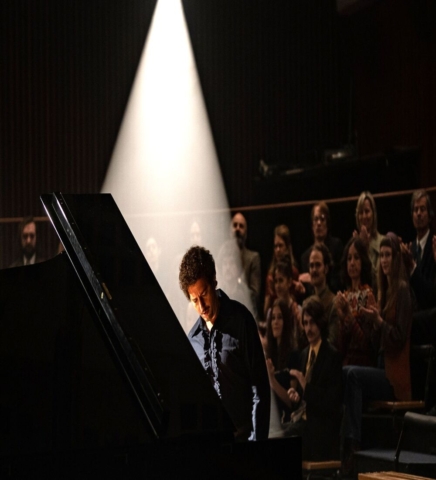
Another Christmas in Sri Lanka at the Hilton when the rains teemed and lashed against the windows and a moderate pianist played “just remember this, a kiss is just a kiss. I defy anyone to read Proust without dreaming about childhood events, recapturing images, recalling laughter or teenage anguish. Proust is not complex but he is all of life.
Recognition and Age
Once you reach forty, the latter parts of his work gather meaning you see a face, there is something you recognise, most often the eyes, sometimes a grimace or smile, and then you know, this is someone you have known well and the creases, the broken veins, the faded hair mislead you.
Jules Wright

Marcel Proust (1871-1922) – Jacques-Emile Blanche ‘Portrait of Marcel Proust 1892’.
Discovering Proust
Mary Ann Caws: What I Remember, Rereading Proust. When, in my twenties, I first read Marcel Proust in order to teach his work, taking an entire summer to read the great novel, I remember my initial fascination with the strongly marked and bizarre-seeming characters, the perceptions that glinted off the surface of my own life as I read about these others. Among the other passages I remember best, was one which has struck most readers, no matter what their age.
Masks and Identity
In the last part of his very long novel of seven volumes, called In Search of Lost Time (or then Remembrance of Things Past, Random House, 1982), there is a celebrated scene that reveals the essential of the work. The participants in what might have appeared to be a masked ball are suddenly seen by the narrator to be themselves, wearing nothing but their own faces, changed so terribly. The masks were the deformations time had wrought. Aged, tottering on stilts, increasingly fragile, these former and longtime friends are now what they seemed never to be about to be, and yet, in fact, they are what we will all be.
Marcel is watching truth as he thinks he is watching disguise, a troubled guest at a revelatory feast.
Memory has woven a tissue of threads over the person or thing remembered, covering over what we knew as real. ‘could rediscover nothing of what had once been their mystery, their fever and their sweetness,’ says Marcel of the persons and things he now sees (1024). And later, wondering where their essence is, at the present, he experiences that pain we all know, increasingly, as we age. The unmasking or the revelation of truth fits with the general theme of Proustian memory: voluntary (what we try to remember) and involuntary accidents that show up the truth: say, the crispness of a white napkin or a loose paving stone that somehow bring back a past moment, restores to now a somewhere and sometime else. The novel is a search for what art can save of truth and life. Here, the writing of the ball scene and its undoing of the mask of untruth, is at once about real discomfort and about what the writer can, must, go on to do. He will then unmask the coverups of our memory, by his craft.
And now what I remember of my first reading merges with my present reading, after so many times of reading in between. For now I remember, far later in my life than when I first encountered this greatest of all French novelists. And, many would say, this greatest of all novelists.

‘Let us be grateful to people who make us happy, they are the charming gardeners who make our souls blossom’ – Marcel Proust
Now, rereading Proust, I see that the unmasking has also to do with the self. Ourselves. What is unmasked is our own glossing over our perceptions. Our memories seem real, but they too bear upon them a gloss: how to see beneath that, except by reading such deep texts as those of Proust. ‘At every moment of our lives we are surrounded by things and people which once were endowed with a rich emotional significance that they no long possess.’ (1086) How to win back our initial emotion in reading and in living our youth as it passes into our own equivalent of a masked ball?
What is so moving to me about this conclusion of the great novel is exactly what I remember from my first reading: the final construction of the edifice, and how humbling is the greatness of art. This life, says Proust, in its half-dark-ness and the deformations of time, ‘can be restored to its true pristine shape…a life, in short, can be realised within the confines of a book!’ (1088) Nothing big-deal here: the narrator, remembering that Francoise builds her creations of simple things – a dress of parts pinned together, a carefully constructed boeuf-en-daube, made of the best and freshest ingredients – declares his entire opus, his work, to be put together like that. Like a dress. Out of parts: ‘pinning here and there an extra page, I should construct my book, I dare not say ambitiously like a cathedral, but quite simply like a dress.’ (1090).
Just the way we ourselves are made, of course, out of fragments. The entire Search, as we now call this enormous heart-rending work, is a memory piece. The famous moments of revelation, are each remembered towards the point of the whole – preserving by art what life undoes, doing by writing what living unpins, renders fragile, impotent, elderly. Proust teaches us to remember. And to see, as we might not have before.
Writing his life in short form, for an Illustrated Life (Overlook, 2003),I wanted to see through his eyes, what he most delighted in watching, like the Ballets Russes, what he most delighted in eating and whom he liked to eat with and when – all these details that mattered so intensely to him. It was somehow as if remembering his fascinations and obsessions reintensified my own; it was as if his way of recounting himself could lead to my own way of recounting myself, writing my own memoir. (To the Boathouse: a Memoir. Univ. of Alabama Press, 2004).
So Proustian memory, about the moments of revelation, gave me a way of memoirising, a way of unmasking what time and my own cover-ups had done. This is what Proust’s great novel can do for and about us, puts us and our fragments together, over time, in our various and ongoing readings. There we each are, gathered around what Proust remembered, and it nourishes our looking back and forward.
Reading this novel, says the author, you are reading yourself. Perhaps that is true of all great works – our remembering them keeps all our so various moments and parts together.

‘A Mask Tells More Than a Face‘ – Oscar Wilde
Extract from ‘Time Regained’ by Marcel Proust,
Chapter I: An afternoon party at the house of the Princesse de Guermantes. At the party I discovered one of my early friends whom I had formerly seen nearly every day during ten years. Someone reintroduced us to each other. As I went near to him, he said with a voice I well remembered: “What a joy for me after so many years!” but what a surprise for me! His voice seemed to be proceeding from a perfected phonograph for though it was that of my friend, it issued from a great greyish man whom I did not know and the voice of my old comrade seemed to have been housed in this fat old fellow by means of a mechanical trick. Yet I knew that it was he, the person who introduced us after all that time not being the kind to play pranks. He declared that I had not changed by which I grasped that he did not think he had.
Then I looked at him again and except that he had got so fat, he had kept a good deal of his former personality.
Nevertheless, I found it impossible to realise it and I tried to recall him. In his youth he had blue eyes that were always smiling and moving, apparently searching for something I was unaware of, which may have been disinterested truth, perhaps pursued in perpetual doubt with a boy’s fugitive respect for family friends. Having become an influential politician, capable and despotic, those blue eyes which had never succeeded in finding what they were after had become immobilised and this gave them a sharp expression like a frowning-eye-brow, while gaiety, unconsciousness and innocence had changed into design and disingenuousness. Emphatically he had changed into another person – then suddenly, in reply to a word of mine, he burst into laughter, the jolly familiar laugh of former days which suited the perpetual gay mobility of his glance. Musical fanatics hold that Z’s music orchestrated by X becomes something absolutely different.
These are shades which ordinary people cannot grasp, but the wild stifled laugh of a child beneath an eye pointed like a well-sharpened blue pencil, though a little on one side, is something more than a difference in orchestration.
When his laughter ceased I would have liked to reconstruct my friend, but like Ulysses in the Odyssey, throwing himself upon the body of his dead mother, like a medium vainly trying to obtain from an apparition a reply which shall identify it, like a visitor to an electrical exhibition who cannot accept the voice from a phonograph as the spontaneous utterance of a human being, I ceased to recognise my friend.
It is necessary, however, to make this reserve that the beat of time itself can in certain cases be accelerated or slowed down. Four or five years before, I had by chance, met in the street Vicomtesse de St. Fiacre (daughter-in-law of the Guermantes’ friend). Her sculptured features had seemed to assure her eternal youth and indeed she still was young. But now, in spite of her smiles and greetings, I failed to recognise her in a lady whose features had so gone to pieces that the outline of her face could not be restored. What had happened was that for three years she had been taking cocaine and other drugs. Her eyes deeply and darkly rimmed were haggard, her mouth had a strange twitch. She had, it seems, got up for this reception though she was in the habit of remaining in bed or on a sofa for months. Time has these express and special trains which bring about premature old age but on a parallel line return trains circulate which are almost as rapid.
I took M. de Courgivaux for his son; he looked younger and though he must have been past fifty, appeared to be no more than thirty. He had found an intelligent doctor, had avoided alcohol and salt and so had become thirty again, hardly even that because he had had his hair cut that morning. A curious thing is that the phenomenon of age seemed in its modalities to take note of certain social customs.
Great gentlemen who had been in the habit of wearing the plainest alpaca and old straw hats which a bourgeois would not have put on his head, had aged in the same way as the gardeners and peasants in the midst of whom they had lived. Their cheeks were stained brown in patches and their faces had grown yellow and had sunk flat like a book. And I thought, too, of those who were not there because they could not be, of how their secretary, in an attempt to give them the illusion of survival, would excuse them by one of those telegrams the Princess received on occasion from such as had been ill or dying for years, who can rise no more nor even move and, surrounded by frivolous or assiduous visitors, the former attracted like inquisitive tourists, the latter by the faith of pilgrims, lie, with closed eyes clasping their breviary, their bedclothes partly thrown back like a mortuary shroud, chiselled into a skeleton beneath the pale, distended skin like marble on a tomb.
Certainly, some women were recognisable because their faces had remained almost the same and they wore their grey hair to harmonise with the season like autumn leaves. But in others and in some men their identity was so impossible to establish for instance between the dark voluptuary one remembered and the old monk of now that their transformation made one think, rather than of the actor’s art, of that of the amazing mimic of whom Fregoli remains the prototype. That old woman yonder is about to weep because she knows that the indefinable and melancholy smile which was formerly her charm cannot even irradiate the surface of the mask old age has affixed to her. Now, discouraged from attempts to please she more adroitly resigns herself to using it as though it were a theatrical mask to make people laugh. But in the case of nearly all the women there was no limit to their efforts to fight against age; they held the mirror of their faces towards beauty, vanishing like a setting sun whose last rays they passionately long to retain.
Some sought to smooth out, to extend the white surface, renouncing the piquancy of menaced dimples, quelling the resistance of a smile doomed and disarmed, while others, realising that their beauty had finally departed, took refuge in expression, as one compensates the loss of the voice by the art of diction, and hung on to a pout, to a smirk, to a pensive gaze, or to a smile to which muscular incoordination gave the appearance of weeping.
Extract from Remembrance of Things Past by Marcel Proust, translated by CK Scott Moncrieff and Terence Kilmartin, published Chatto and Windus. Reprinted by permission of The Random House Group Ltd.
Through their reflections, Jules Wright and Mary Ann Caws reveal how Marcel Proust transformed memory into literature. Together, with the excerpt from ‘Time Regained’, their texts explore the fragility of perception, the transformation of identity through time, and the deeply personal act of remembering. Ultimately, they remind us why Proust remains one of literature’s most enduring voices on memory, time, and human experience.
If you want to discover more about Marcel Proust, you can read ‘Britannica – Marcel Proust‘
If you enjoyed reading ‘Marcel Proust: A Love Letter to Memory’, then why not read ‘Webbed; Literature and the Conscious Mind‘
.Cent Magazine, London. LuxuryMind
Follow us: