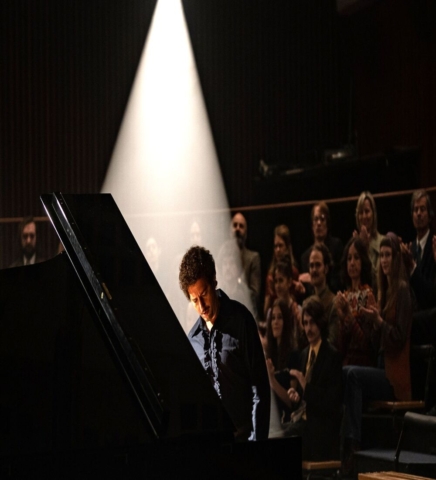
Spotlighting The 90s; From One Extreme To The Other
The 1990s, for many people, appear as a lost euphoria; whether one has experienced it or not, it is regarded through rose-tinted glasses. On the one hand, it was a presumed peak of humanity, marked by artistic explosions, a creative pinnacle in music, iconic fashion, and blood-soaked Tarantino films. Yet was it all such a pretty picture? Perhaps the 90s were also a polarising period. There were raves with (literally) ecstatic crowds, but an increasing preoccupation with political issues and climate change. The decade was like yin and yang, like flashing neon lights Spotlighting the 90s – from one extreme to the other.
Did you experience the borderless, creative hedonism that ran in ’90s blood? Maybe you weren’t part of the euphoria, so you may not know it was set against a backdrop of massively changing values, where people, even those who partied a lot, began to look in and around, rather than just at themselves.
In the U.K., this period was embodied by the Prime Minister’s embrace of fashion, music and the Young British Artists known as the YBAs. The political sphere, for the first time, wasn’t separate from the contemporary arts. The arts were finally seen in the UK as a viable creative business, not some poor relation. People experimented, succeeded, failed, then experimented even more. And while it was undeniably exciting, there was also a sense of instability.

Marc Quinn, Self, 1991
A New Archive Of The Decade
In his new book, ‘The 1990s: A Visual History of the Decade’, Henry Carroll takes the reader through photographs and summaries that encapsulate what the 90s really were. The book explores pop culture and creativity, as well as technology and political issues. One of the subsections in the book deals with the mass of creative spirit:
‘Ideas were everywhere. Good or bad, it didn’t matter.’
Henry Carroll
There were significant cultural shifts both artistically and politically, which Carroll beautifully compiles in the form of painterly and literary patchwork. Ultimately, he shows the humanness of the decade, without romanticising or disregarding it. From all its highs to all its lows, and all in between.
90s Music Galore: Hip Hop, Acid House Raves, Grunge
The 90s were famous for the breadth of music genres and records that they birthed. Acid house and Britpop were all the rage in the U.K., while grunge and hip hop took over the U.S. The crowds and attention they drew in marked them as revolutionary.
Artists like Tupac and Notorious B.I.G. were worldwide sensations, and hip hop became a voice to express social issues with. Meanwhile, grunge bands like Nirvana and Pearl Jam, dressed in worn-out clothes, yelled angsty lyrics into the microphone over distorted guitar strumming. This carelessness represented a social distaste for classist attitudes and a desire to rebel, making non-conformity cool.

Elaine Constantine, Mosh, The Face, 1997
In the U.K., rave culture completely took over every unmonitored corner. Ravers (as they were coined) drove across the country to attend raves in unknown fields or abandoned warehouses, often stopping on the journey to get the full address, having previously only been given half the information beforehand to stop the police cancelling the event. The parties lasted whole weekends, and many remember living that era from one rave to another.
The shoulder pads and elitist dress code of the ’80s were replaced with tie-dye shirts and clothes you could really, properly dance in. The rave culture, fuelled by the new Ecstasy drug, was a place of love. One’s race, gender, or sexual orientation made no difference. So when we talk of crowds dancing and sweating in droplets of liberation, it certainly appears to be a period of social blooming.
AIDS Epidemic: Scared To Touch
But issues surrounding the LGBTQ+ community weren’t really solved. The AIDS epidemic was causing many to fear doing as much as touching a sick person. Many gay men recount single weeks in which they had to attend multiple funerals. The world’s response wasn’t to save, but to shun. 44.1 million people died from the epidemic as a result. In 1996, the Defence of Marriage Act, which recognised only heterosexual marriage, was passed in the U.S. Meanwhile, in the U.K., same-sex marriage was legalised only in 2013.

Gillian Wearing, Signs That Say What You Want Them To Say And Not What Someone Else Wants You To Say, 1992-1993
A Deadly Embrace
Death wasn’t just a problem among queer people. During the Rwandan Genocide, the Western nations seemed to completely close their eyes to the 100 days of slaughter, during which 800,000 people were killed. Although one of the notable developments of the 90s was the internet, this conflict went largely under the radar.
Beyond the genocide, there were the Yugoslav Wars, which encompassed conflicts in Croatia and Bosnia, stretching over the course of the decade. The wars were immensely cruel, with massacres and ethnic cleansing marking it one of the deadliest armed conflicts since WW2.
Quite paradoxically, the 90s were also a time of progressive thinking.
As the world moved into a new millennium and recognised the uncertainty of what the 2000s would bring, fears around climate change emerged. This resulted in 84 countries signing the Kyoto Protocol in 1999, promising to limit greenhouse gas emissions.
In 1997, the Labour government finally came into power with Tony Blair’s election. The people celebrated in the streets of London and the UK, with the prime minister becoming a sign of hope that Britain was moving away from conservatism and towards free artistic expression.
Blair readily embraced the YBAs and all things creative, knowing they were a great way of showcasing that the U.K. was moving in a new, forward-thinking direction.

Shoichi Aoki, Fruits, 1998
Cool Britannia 90s Celebration Of Art And Fashion
The U.K. creative scene signalled the birth of ‘Cool Britannia’, with bands like the Spice Girls and Oasis winning the hearts of melomaniacs worldwide. Many might remember the famous picture of Ginger Spice Geri Halliwell rocking the Union Jack dress at the 1997 Brit Awards. The bold mini dress signalled a shift in how Britishness was celebrated, moving away from stuffy tradition to a sexy cultural embrace.
The fashionability of Brits in the eyes of the world went beyond pop culture, where fashion designers led buyers to London. John Galliano and Alexander McQueen put British design at the centre of the fashion sphere. McQueen’s designs weren’t just about clothes, but about merging art and theatricalism with fashion. Other names such as Hussein Chalayan, Owen Gaster and Copperwheat Blondel became international stars.
With his astonishing 1995 collection ‘Highland Rape’, which featured bloody and torn garments symbolic of England’s wrecking of Scotland, McQueen’s clothes sparked much conversation. As most of his collections roused controversy and appraisal, Alexander McQueen was seen as a creative genius who pushed boundaries.
Moreover, the emergence of supermodels further connected fashion and celebrity status. Household names that remain influential to this day are Kate Moss, Naomi Campbell and Stella Tennant. Whatever they wore was guaranteed to sell. And so Britain became a capital of fashion glamour with a little bit of edge.
Feminist Music And Sexual Liberation
The feminist movement also took a significant turn, bringing about third-wave feminism. A new movement called ‘Riot Grrrl’ took shape, with Bikini Kill coining the term ‘Girl Power’. Artists began to take control of their gender and sexual identity.
Tracey Emin, a prominent figure amongst the YBAs, showcased a tent covered in appliques of her sexual partners’ names. This work was not just about shocking the viewer but about inviting its viewers to be honest with themselves. And more than anything, Emin’s work and the Riot Grrrls created a space for women to exist in authenticity.
The hip hop scene also made space to spotlight its female pioneers, like Missy Elliott and Lil’ Kim. There was an ownership of female libido in their lyrics, rapped with playfulness and pride. Television welcomed a similar shift. The iconic ‘Sex And The City’ characters were four successful women who loved sex and loved to speak about it in detail. Rather than being dependent on men, the women regarded dating as a source of entertainment and relied on each other for emotional support. Wearing designer dresses, they strutted the streets of New York with confidence. Girls thus began to grow up with models of female independence.

Adrienne Salinger, Fred H, 17, Syracuse, New York, 1990
Technology Trends And Issues
Now, what perhaps cannot be strictly categorised under ‘positive’ or ‘negative’ as it continues to remain this seemingly untamable dragon to the present day: the internet. In just three years, between 1994 and 1997, the number of websites skyrocketed from 3000 to one million, and the users from 16 to 70 million. The internet was like a new puppy that you didn’t realise you’d also have to walk and feed, outside of playing with it.
Was it exciting when Apple released the iMac G3 with fun-coloured cases that made each of them feel like their own Spice Girl? Yes. Was this also the beginning of people spending time at home in front of the screen, especially if they already had an introverted disposition? Absolutely.
Like all fresh ideas, there was excitement that teetered on reckless misuse.
Access To Everything For Free
There was very little regulation of what could become a famous ‘dot com’, with websites like Rotten.com, which stored all things macabre. Of course, as time went on, regulations were put in place, yet the 90s initiated the trend of endless access to previously unseen corners of the world. Each internet startup wanted to one-up the other, and ideas were coming from all around.

Mark Napier, Riot – After Browsing To Several Net.Art Pages, 1999
The democratisation of information access came as a result of the World Wide Web. In a way, it was a digital revolution where specific answers were available to users even at odd hours of the day. It put aside the need to sacrifice hours surfing books to find relevant articles, made available resources that raised awareness about the climate, and opened up curiosity to extend further than it could before.
90s: A Polarising Topic
Carroll ends his book with questions that many asked themselves as they stepped into the Y2K. Questions regarding the state of the world, the environmental impact, the internet… Above the final paragraph are two images: New Year’s fireworks, and by its side anti-aircraft fire in Baghdad, which also resembles straight-shooting laser lights. This seems symbolic of a time that probed a constant swinging between black and white. This timeless saying sums this up perfectly:
‘The interplay of opposite principles constitutes the universe.‘
Confucius
Henry Carroll’s ‘The 1990s: A Visual History of the Decade’ is coming out on October 9th, 2025. Find out more Here
If you enjoyed reading Spotlighting The 90s; From One Extreme To The Other, why not explore 12 Famous Weird Buildings To Visit On The World Map?
.Cent Magazine; London. Luxury Mindset
Follow us: